Operations | Monitoring | ITSM | DevOps | Cloud

Beyond Traditional Observability: Turning Technical Insight into Operational Intelligence

Observability has become a central part of modern IT operations and for good reason. Metrics, logs and traces give technical teams detailed evidence about how applications, infrastructure and services are behaving. Such evidence helps them investigate performance degradation, identify abnormal behavior and understand what changed around the time an issue occurred.

Azure in Bleemeo: your subscription next to your servers, with one read-only role

Most teams that run on Azure do not run only on Azure. There is a database on a VM nobody wants to move, a Kubernetes cluster somewhere else, a few servers in a rack, and a monitoring setup that grew around all of it. Azure Monitor sees the Azure part very well and nothing else, so the picture of an incident ends up split across two consoles, two alerting configurations and two sets of dashboards. Bleemeo now connects to Azure the same way it already connects to AWS.

Why We Built the Komodor Agentic Operations Platform: Q&A with CEO Ben Ofiri

Komodor spent years building an AI SRE platform before the category had a name. With the launch of the Komodor Agentic Operations Platform, it’s opening that engine up so enterprises can build, run, govern and optimize their own agents in production. Following the launch, co-founder and CEO Ben Ofiri sat down to talk about why now is the right time for agentic operations, what breaks between prototype and production, and where operations will head next.

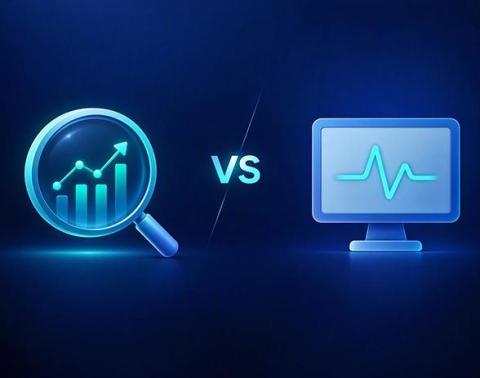
Observability vs Monitoring: Why Does IT Still Find Out After the Business Does?

✓ operational truth IT finds out late because traditional monitoring is built to detect what goes wrong, not what has quietly stopped happening. Closing that gap requires observability that validates business journeys end to end, detects missing activity, checks its own coverage, and predicts degradation before a threshold is ever crossed.

The Data Race That Wasn't a Bug (and the One That Was)

Imagine this: you are testing the performance of some part of your application. Everything is going smoothly, the numbers look good, and as a last check you turn on Go’s race detector. Then, out of nowhere, it prints a warning you didn’t expect: So you look at it. You look at it again, and again, and you think: “What the…?” The race is between your code and a goroutine you never started, somewhere deep inside net/http. You have no idea how that is possible, or why.

AI Agent Context Explained: What Agents Can't See in Your Infrastructure

The "C" word is a controversial subject in the US, but we have to talk about "context", and what it means to an AI Agent. For starters, agents can only act on what's in their context window. Everything outside of it is a guess. In application code that limit is usually an annoyance.

Run your first workflow in minutes, no sales call

The regression nobody catches passes a busy review and ships. An off-by-one, a change that reads as sensible and quietly breaks something, gets a nod from a tired reviewer and lands in production, where it erodes trust one small defect at a time. You can have an AI code reviewer running on your own repository in the time it takes to read this page. Get started without having to book a demo or contact sales.

Solar as a Complement to Auxiliary Power Units (APUs) for Semi Trucks

An auxiliary power unit for semi trucks provides power for onboard equipment when the main engine is not running. Depending on the system, an APU can support air conditioning, heating, lighting, refrigeration, communication equipment, and other electrical loads during rest periods or while the truck is parked. This allows auxiliary equipment to operate without running the truck's primary engine for every electrical or climate-control demand. That can be useful during overnight stops, loading and unloading, and other periods when the vehicle remains stationary.