How to Create a Docker Volume - Civo Academy
Learn how to create a Docker volume or how volumes in general work within Docker.


The latest News and Information on DevOps, CI/CD, Automation and related technologies.
Mattermost v6.6 is generally available today and includes the following new features (see changelog for more details).
Confidence in the quality, robustness, and reliability of a product are among the most valuable qualities sought after by consumers as well as businesses. This confidence is built through the rigorous testing of a product. In software engineering, practices like extreme programming (XP) and test-driven development (TDD) champion the belief that automated testing should be used from the start of a project.
Today’s enterprises are struggling to cope with the complexities of their environments, technologies, and applications. On top of these challenges, they face faster release rates, and the need to always deliver the highest level of performance and availability to end-users, at the lowest possible cost.
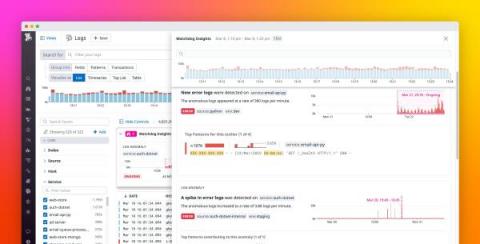
Modern DevOps teams that run dynamic, ephemeral environments (e.g., serverless) often struggle to keep up with the ever-increasing volume of logs, making it even more difficult to ensure that engineers can effectively troubleshoot incidents. During an incident, the trial-and-error process of finding and confirming which logs are relevant to your investigation can be time consuming and laborious. This results in employee frustration, degraded performance for customers, and lost revenue.
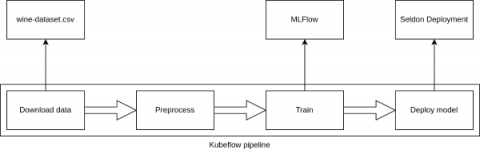
MLOps pipelines are a set of steps that automate the process of creating and maintaining AI/ML models. In other words, Data Scientists create multiple notebooks while building their experiments, and naturally the next step is a transition from experiments to production-ready code. The best way to do this is to build an effective MLOps pipeline. What’s the alternative, I hear you ask? Well, each time you want to create a model, you run your notebooks manually.