Pulsant Cloud Maturity Matrix
Pulsant can help you reset your cloud strategy by assessing your cloud readiness, reviewing workloads, orientating your strategy, and building a tailored cloud roadmap to help you reach your goals'.


The latest News and Information on DevOps, CI/CD, Automation and related technologies.
Today, it’s difficult to compile a list of all the managed infrastructure you have across your global estate. It’s even more difficult to collect all of the properties and values that make up that infrastructure, such as operating systems, enterprise licenses, networks, disks, mount points, data centers, regions, patch states, hypervisors, and so much more. Nevertheless, it’s ever more critical to have this information at your fingertips.
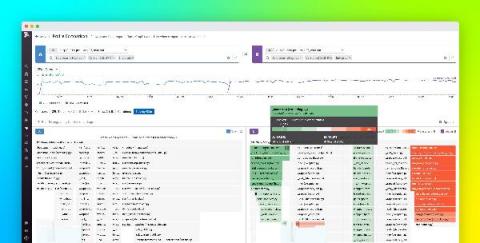
Code profilers offer detailed insight into the efficiency of application code by measuring things like the execution time and resource utilization of a service. Datadog’s always-on, low overhead Continuous Profiler provides snapshots of code performance for a service that are tagged with key metadata (e.g., region, service, release), so you can easily identify and optimize inefficient code.
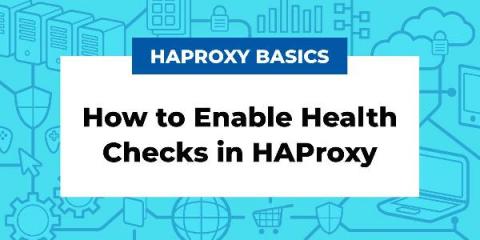
HAProxy provides active, passive, and agent health checks. HAProxy makes your web applications highly available by spreading requests across a pool of backend servers. If one or even several servers fail, clients can still use your app as long as there are other servers still running. The caveat is, HAProxy needs to know which servers are healthy. That’s why health checks are crucial.
Picking the right performance testing tool can be a challenge. What should you look for and what is important? Performance testing is a phrase many developers have come across at some point, but what is it exactly? In simple terms, performance testing is a software testing practice used to determine stability, responsiveness, scalability, and most important, speed of the application under a given workload.
The Puppet Developer Kit was launched in 2017 to help our users develop high quality modules faster and over the years, it has seen regular development towards that goal. It was designed to be a single install that would provide everything you needed to write, lint, test and publish a Puppet module — and for the most part, that's what it did.
Quickly and efficiently manage your incidents with FireHydrant and Backstage!
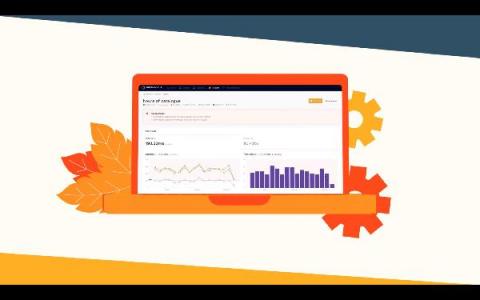
We’re proud to announce that our front end FireHydrant plug in has been open-sourced as part of Backstage, an open platform for infrastructure tooling, services, and documentation created at Spotify. We introduce FireHydrant’s incident management and analytics in Backstage, where you can quickly and efficiently manage your incidents.