Operations | Monitoring | ITSM | DevOps | Cloud

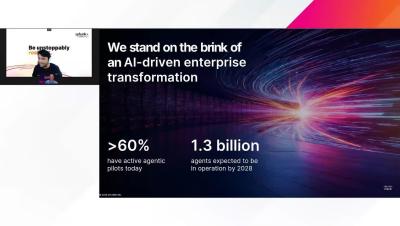
Agent Mode Engaged! Enchaining Agentic Operations with Splunk AI Assistant 2.0

In this session, we will introduce your new "digital teammate"—the supercharged Splunk AI Assistant. We’ll demonstrate how the new Agent Mode provides the context, reasoning, and recommendations necessary to reduce your mean time to resolution (MTTR) from hours to minutes.


AI budgeting: how to plan and forecast AI spend

AI budgeting is the process of planning, allocating, and forecasting an organization's AI spend: model and API costs, AI infrastructure, tooling, and the people running it all. It differs from traditional budgeting because AI spend is usage-based, scales with product success rather than headcount, and often spans multiple providers.

From Log Line to Merged Fix: AI SRE Agent AURA with GitHub MCP

Knowing why it broke is not the same as having it repaired. Point the agent at the repos behind the service and the change comes back as a pull request. A Govee integration crash-loops under Home Assistant because the container cannot write to a directory it does not own. That much was already established: the previous homelab video stopped at the root cause on purpose, so the next pass could improve the agent's configuration first.

Garbage in, garbage out: Splunk's Steve Flanders on why AI can't fix your bad telemetry

Cortex co-founder and CTO Ganesh Datta sits down with Steve Flanders, who leads AI transformation at Splunk and wrote the book on OpenTelemetry, to talk about why AI acceleration without strong observability foundations creates more problems than it solves.

Why Energy Efficiency Matters in Modern Office Buildings

Commercial office buildings consume massive amounts of electricity daily to keep lights, computers, and climate systems running continuously. Rising utility costs and changing corporate standards push management teams to evaluate baseline energy habits. Cutting unnecessary power usage preserves operational capital and lowers overhead costs. Modernizing office infrastructure creates leaner, more resilient business environments for tenants and owners alike. Addressing structural energy waste improves indoor comfort while shielding properties from fluctuating power rates.

From Data Analytics to AI: The Technology Behind Modern Fraud Detection

A supplier changes its bank details at 3:12 p.m. Three invoices arrive before 5:00, each just below the level requiring senior approval. That evening, an unfamiliar device accesses the payment account. None of those events proves fraud. Together, they form the kind of pattern modern detection systems are built to recognise.

AI and Real-World Evidence: The Growing Role of Intelligent Systems

A modern incident rarely leaves one decisive record. It leaves a data field. A vehicle stores speed and brake input. A phone preserves motion and location signals. Cameras capture visible movement, while cloud platforms log account activity. Artificial intelligence can connect these fragments and build a timeline that a human investigator can test. Machines have not become witnesses. They have become tools for comparing what different systems recorded, exposing conflicts, and showing where the evidence remains incomplete.

The Technology Behind the Rapid Growth of On-Demand Home Services

A leaking pipe may look like a simple booking problem. For the platform receiving the request, it is a live decision problem involving diagnosis, skills, distance, time, price, identity, risk, and incomplete information. The rapid growth of on-demand home services did not come from placing a calendar inside an app. It came from making field work machine-readable enough to classify, optimize, monitor, and improve.