Operations | Monitoring | ITSM | DevOps | Cloud

The latest News and Information on DevOps, CI/CD, Automation and related technologies.

Code signing: securing against supply chain vulnerabilities

When creating an application, developers often rely on many different tools, programs, and people. This collection of agents and actors involved in the software development lifecycle (SDLC) is called the software supply chain. The software supply chain refers to anything that touches or influences applications during development, production, and deployment — including developers, dependencies, network interfaces, and DevOps practices.

Why it's important to upgrade your Mattermost Server

Upgrading your Mattermost server involves a bit of research, preparation, and downtime. The pressure to keep your Mattermost instance healthy and reduce downtime for a core system within your organization can be intimidating. Recently, we worked with a handful of customers who were experiencing issues upgrading from Mattermost v5.37 and v5.39 to v6.x. Unfortunately, migration scripts were required to make significant database changes, and there was an issue in product performance.

Application Deployment to Civo with a Terraform Template

Join our CTO, Dinesh Majrekar, as he deploys the infrastructure needed to host any application on Civo. This session will use a new terraform template repo to deploy a cluster, install an ingress and let-encrypt helm chart all from terraform. Once these basics are in place, the cluster can be used in GitOps pipelines by other teams to actually deploy their code.

System Administrators: Everything You Need to Know to Become a SysAdmin

Having a reliable IT infrastructure is crucial to the health of your company or organization. And while this is generally true, it’s doubly so in our current times, where practically everything is digital. So, who is the lucky one to make general decisions about how to run a system efficiently — and keep it going? That would be the System Administrator. But what does a SysAdmin actually do? That's what we'll answer here!

Driving a customer-focused incident response process

Deep into an incident, Slack firing, up to your ears in decisions, not sure where to turn next? It’s easy for external communication with your customers to fall far down the list of priorities in these moments. However, these are the exact situations where comms are vital, and where underestimating their importance can having damaging and lasting effects on your organisation.

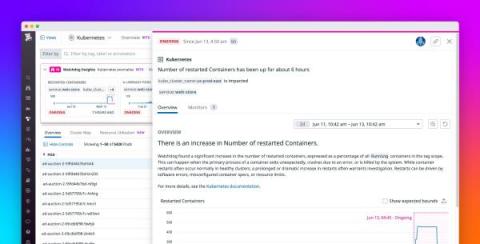
Expedite infrastructure investigations with Kubernetes Anomalies

Modern Kubernetes environments are becoming increasingly complex. In 2021, Datadog analyzed real-world usage data from more than 1.5 billion containers and found that the average number of pods per organization had doubled over the course of two years. Organizations running containers also tend to deploy more monitors than companies that don’t leverage containers, pointing to the increased need for monitoring in these environments.

Migration Guide - Jenkins to Razorops

Organizations are becoming more aware of the advantages of upgrading their continuous integration and continuous delivery (CI/CD) pipelines and moving them to the cloud, from lowering infrastructure costs to eliminating security threats. But carrying out a transfer is challenging, especially when a variety of platforms and technologies are involved.

Episode 6: Mooving to... Real release strategies with Jake Laverty

Every product or application needs a release strategy. It’s how you can double check that everything in your deployment is appropriately tested, validated and verified. Having a standardized release strategy in place allows your team to follow a protocol and reduce the number of unknowns they must face in the product life cycle. However, there are a few considerations to make this critical process run smoothly.

Continuous integration for progressive web apps

Web and browser technology continues to advance, narrowing the gap between the performance of web and native applications. Features that were once exclusive to native applications can be implemented in web applications. This is due in part to the emergence of progressive web applications (PWAs). Web applications can now be installed, receive push notifications, and even work offline.