Operations | Monitoring | ITSM | DevOps | Cloud

The latest News and Information on DevOps, CI/CD, Automation and related technologies.

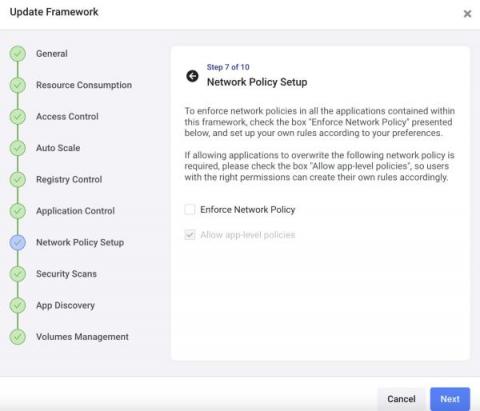
What is a YAML? - A Box of DevOps?

I recently returned from a birthday trip to Napa Valley and got to spend some time with the Shipa Team in Palo Alto during the trip. Grabbing a coffee on my trek back to San Francisco, I overheard someone talking about YAML at the coffee shop and I had to hold back my laugh. You usually do not hear folks talking about YAML out in the public but this is San Francisco. For many engineers, YAML is a way of life.
A guide to Microsoft Azure Regions

The global footprint of Microsoft Azure is made up of physical infrastructure of over 200 data centres and connective network components, arranged into regions, and linked by a large interconnected network. Each of the Azure data centres provides high availability, low latency, scalable cloud services close to users to improve reliability and speed. In this blog, we look at the Azure Regions, and explain the benefits of using a direct connection to access Azure infrastructure.

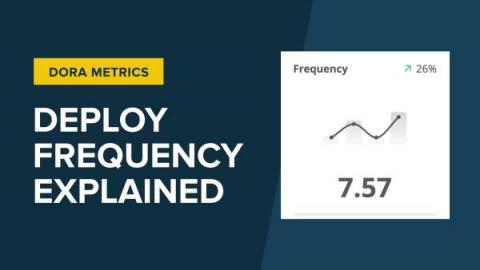
Deployment Frequency Explained

While metrics have always been fundamental to improvement in the business world, the growing prominence of DevOps in recent years has elevated their importance in the context of software development. To build a continuous improvement culture, you need a set of metrics that allows you to establish a baseline and inform where the improvement opportunities lie. Arguably the most popular of them is DORA metrics. In this post, we will focus on Deployment Frequency, one of four DORA metrics.

Deploying Docker Containers on AWS: Elastic Beanstalk vs ECS vs EKS

Containerization packages a software component and its environment, dependencies, and configuration into an isolated unit called a container. That makes it possible to deploy an application consistently across different computing environments, whether on-premises or on the cloud. The concept of containerization is more than a decade old.

Running Serverless Applications on Kubernetes with Knative

Kubernetes provides a set of primitives to run resilient, distributed applications. It takes care of scaling and automatic failover for your application and it provides deployment patterns and APIs that allow you to automate resource management and provision new workloads.

Predict the cost of IP ranges with new enhancements to the Resources tab

One of our most requested and popular features, IP ranges for the Docker executor, recently became available to all customers on a Performance or Scale plan. With IP ranges, you can route job traffic through an IP address that is verifiably associated with CircleCI. This enables your team to meet compliance requirements by limiting the connections that communicate with your infrastructure. With any new feature, you want to know how much it’s going to cost your team.

What Does AIOps Mean for SREs? It's Complicated.

If you’re an SRE, you might view AIOps with great excitement. By automating complex workflows and troubleshooting processes, AIOps could make your life as an SRE much easier. Alternatively, SREs may choose to view AIOps with disdain. They might think of AIOps as just a fancy buzzword that doesn’t live up to its promises, and that can become a distraction from the SRE tools that really matter. Which perspective is right?

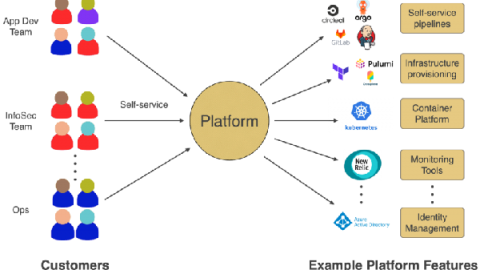
Platform Engineering teams are the developer's cloud provider

Organizations rely more than ever on their engineering teams to get in front of their customers. Quickly delivering the latest functionalities to end-users in a reliable way can make or break a company these days. This need raises the pressure on engineering to deliver a scalable platform, rollout application updates faster, and manage applications efficiently once in production.

Shifting Left for DevSecOps Success

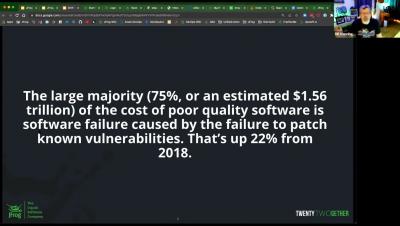
Catch this session to see exactly what does “shift left” security mean? More importantly, how does this strategy affect a developer’s workflow? In this workshop we walk attendees through the steps of setting up an end-to-end DevSecOps solution to automate your build artifact storage, vulnerability detection, testing, and deployment. Lastly, attendees learn how to take advantage of JFrog’s IDE integration and JFrog XRay to increase your confidence in the security of your application, all within a freely available DevSecOps environment!