Operations | Monitoring | ITSM | DevOps | Cloud

The latest News and Information on DevOps, CI/CD, Automation and related technologies.

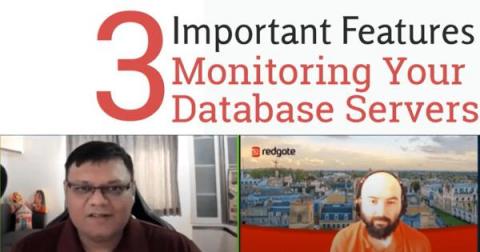
What does Pinal Dave think of SQL Monitor?

Last week we had the pleasure of speaking to SQL Authority’s Pinal Dave to show him some of our favorite SQL Monitor features! Pinal has used – and been a fan of – SQL Monitor since it launched in 2008 (fun fact: it was named SQL Response back then). There are, however, some newer features that Pinal isn’t too familiar with, and we were delighted to introduce those to him.
Pulumi or Terraform for applications? Maybe, both?

Cloud-native is an evolving architecture. Existing vendors will keep on evolving their offerings and different teams inside your organization should be able to use the tool that will support them better in delivering their desired outcome fast. By implementing a standard application layer, you enable teams to adopt what works best for them while the DevOps team can focus on adopting the infrastructure components they believe to be best to support their organization.

Reel in your activities: announcing cancellable activities and crons

Feature announcement: You can now cancel Upsun activities through the CLI and management console. Last year we released activity scripts, custom scripts that you can upload to your projects to run in response to any project or environment activity. In March we announced parallel activities, a queue that allows two simultaneous processes across your environments. Today we’re announcing another change to your activities—you can now cancel them.

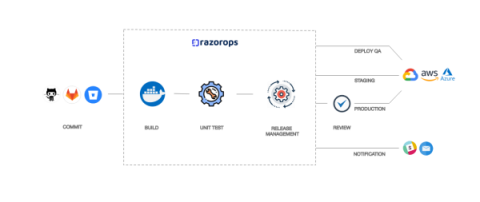
What is CICD Pipeline? Explanation of CICD Pipeline along with Examples.

Continuous Integration(CI) is a software development practice where developers frequently merge the code and the changes in a central repository. The important goals of continuous integration is to find and resolve the bugs more quicker, improve the software quality, and reduce the time taken to validate and release new software updates. Continuous Delivery(CD), which is done on the top of Continuous Integration and includes the practice of automating the entire software release process and builds.

FireHydrant is now free for small teams

We envision a world where all software is reliable, and today we’re making that vision more of a reality for small teams. Available today, our new Free Tier helps smaller teams wrangle their reliability challenges with our enterprise-grade Incident Management, Service Catalog, and communications products. Our new package also has every feature that makes FireHydrant great with generous limitations.

Introducing Epinio 0.6: Smaller, Faster *and* More Capable!

With our latest releases of Epinio, we’ve focused on making both the setup and developer experience much more streamlined. We’ve looked at where users are having issues and removed many of the roadblocks. This reduced footprint also allows for more customizability and easier long-term maintenance. If you are not familiar with Epinio, it is an application development engine for Kubernetes that lets you go from code to URL in a single step.

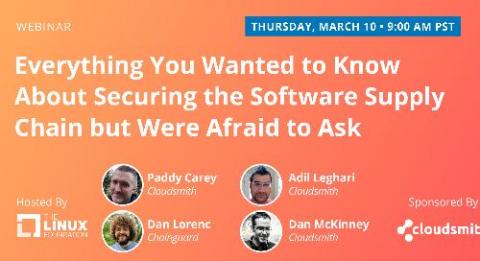
Securing The Software Supply Chain Linux Foundation Webinar

From the history of supply chain security threats to security development and deployment we've covered everything you’ve always wanted to know about the software supply chain but were afraid to ask. Dan Lorenc, Founder/CEO, Chainguard, Paddy Carey, Senior Staff Engineer, Cloudsmith, Adil Leghari, Solutions Architect Manager, Cloudsmith and Dan McKinney, Developer Relations, Cloudsmith, gathered for a fireside chat to cover your most burning questions.

Introducing StackState 4.6: Harnessing the Power of Topology + Telemetry + Traces + Time

Companies depend on observability insights to provide reliable online services to their customers. To support their efforts, StackState is proud to announce a new version of our unique topology-powered observability software, StackState v4.6, available now. This new version brings powerful new capabilities to DevOps and SRE teams who need to maintain a deep understanding of how their stack is behaving to meet their SLOs.

How To Conduct A Cloud Cost Analysis: A Step-By-Step Framework

Business leaders and team members face countless decisions every day, some of which are certain to have an impact on the future of a company. Perhaps the most impactful to a SaaS company’s bottom line are financial decisions related to the cloud. Engineers and team leads need to know which cloud architecture choices are worthwhile and which should be scrapped in favor of a more cost effective model.