Multiple responders for a single incident
Add multiple responders to one or more incidents. Helps in gaining empathy, transparency, and future context for an incident that helps reduce MTTR.


The latest News and Information on DevOps, CI/CD, Automation and related technologies.
Add multiple responders to one or more incidents. Helps in gaining empathy, transparency, and future context for an incident that helps reduce MTTR.
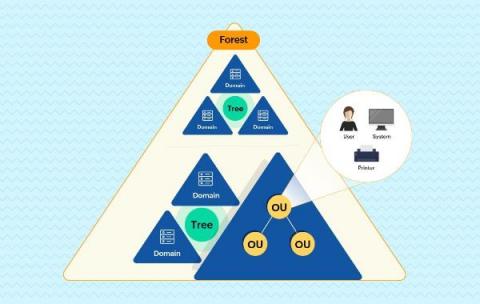
Active Directory Domain Services (AD DS) is the traditional, on-premises domain service offered by Microsoft. It is the core component and a server role in Active Directory (AD), the specialized, proprietary directory service in Windows operating system environments. Consider an enterprise or a complex business set up with many connected network resources. In order to ensure the effective management of these resources, IT administrators use AD and its components, including AD DS.
For any enterprise, they're more than likely all too familiar with the struggles and complexities of scaling their environments and applications. Whether these applications live on premise, in a cloud environment, or somewhere between in a hybrid state, an age-old question engineering ponders on is, “Can my application and environment scale?
Previously announced as a community-led project, the Terraform provider for Honeycomb is now officially maintained by Honeycomb in partnership with Hashicorp. We recognize how valuable supporting configuration as code is for our customers, and this change in ownership affirms our commitment to ensuring your ability to quickly make the most of Honeycomb’s Management API.
Engineering teams can now manage incidents in Microsoft Teams. You’ll have the consistent process and automation of FireHydrant right in the messaging tool you use every day. Effectively run through the entire incident response lifecycle: declare and manage incidents, collaborate with stakeholders, and resolve incidents faster when you integrate FireHydrant with Microsoft Teams.
Over the last decade, containers have become an essential part of running infrastructure more efficiently. Containers enable productivity, automation, and cost-effective deployments. But there are different types of containers to consider, and this blog explains what Linux containers are, and how they differ from application containers.
We are going to deploy a Go application directly from your repo to AWS with Cloud 66. Any application using any language on any framework can be deployed with Cloud 66 as long as it has a Dockerfile. Note: Rails applications are exceptions as we deploy them natively. If your application does not have a Dockerfile, we will suggest one for you based on your code. However, we would recommend reviewing what we have suggested and making sure the Dockerfile meets your requirements.
If you’re like many of our customers, the phrase software supply chain entered your lexicon this year. You’ve begun to feel the complexities and vulnerabilities of that supply chain. You’ve connected the dots between more reliable software delivery and business success. You’re recognizing the gains developer efficiency can have on profitability.