The latest News and Information on IT Service Management, Service Desk and related technologies.
As explained in the earlier “What’s ITOM?” blog, there are various definitions of IT Operations Management (ITOM). This variation has a knock-on for everything related to ITOM, including the relationship between ITOM and DevOps. This issue is further complicated when people and organizations have different views of what DevOps is and isn’t. Hence, we must start with a single definition for ITOM and DevOps.
Stock is one of the biggest costs for some associations, which is the reason most organizations are aware of stock levels. Before PCs, monitoring stock included single-stage estimations done by hand per thing, per area. This made it troublesome or almost impossible to accomplish complete visibility across huge supply chains. That is why an inventory-intensive organization must invest in an automated inventory management system.
This is an increasingly popular question for IT professionals. In part, this is driven by the need for organizations to use IT Operations Management (ITOM) in conjunction with more traditional IT service management (ITSM) because of the ever-increasing reliance on technology to enable business operations and outcomes. To help with your understanding, this blog explains what ITOM is, why it is needed, and what it entails.
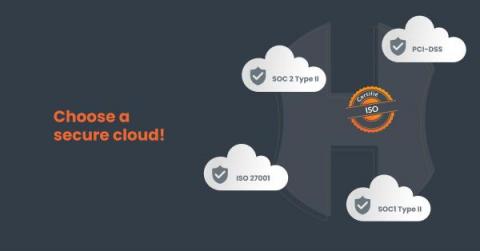
More and more companies around the world are using cloud solutions to run their applications, software or to store their data. But what about cloud compliance? The democratisation of the cloud is not surprising as it provides access to virtual data storage where companies no longer need to buy or maintain their own IT infrastructure. However, with cloud solutions, the security of user data should not be overlooked. There are cloud certifications and regulations that can help you in your choice.
Last year, we announced our partnership with the National Cybersecurity Center of Excellence (NCCoE) at the National Institute of Standards and Technology (NIST) to work on the Implementing a Zero Trust Architecture project. After a year of collaboration with its industry partners, including Ivanti, NIST recently released its preliminary draft, NIST Cybersecurity Practice Guide SP 1800-35 Vol B, for public comment.