Operations | Monitoring | ITSM | DevOps | Cloud

Monitor HTTPS and SVCB Records with DNS Check

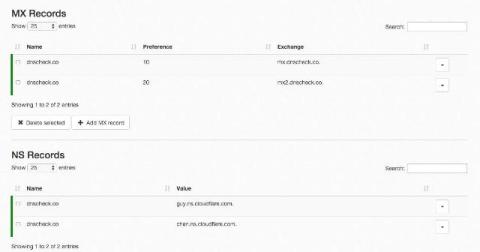
DNS Check now supports monitoring HTTPS records and SVCB records, DNS record types 65 and 64, both standardized in RFC 9460. They tell a client how to connect to a service rather than only where it is: which HTTP versions the endpoint speaks, which port it listens on, which addresses it can start connecting to, and which keys it needs for Encrypted ClientHello, all before it opens a connection.

How to Write Runbooks Your On-Call Team Actually Uses

Most engineering teams have on-call runbooks. Very few have on-call runbooks that anyone opens during an actual incident. The document exists, it was written with good intentions during a quiet sprint, it is linked from a wiki page called "Operations", and when the pager fires at 3 in the morning the responder ignores it completely and starts guessing in a terminal instead.

Database Branching Explained: How It Works and When to Use It

Database branching solves a strange mismatch in modern development: code gets its own branch, but the database often doesn’t. Developers can work independently in Git, then end up sharing the same development database, waiting for a fresh copy, or trying not to break each other’s schema changes. The result is a lot of database sprawl.

Hybrid cloud management: 6 challenges IT teams need to solve in 2026

In 2026, a hybrid cloud is no longer something organizations are working toward; it's already where they are. According to Forrester's The State Of Cloud Series 2026, the vast majority of enterprises across major markets, including the United States, India, Australia and New Zealand, Canada, and the Asia-Pacific region, are running some form of a hybrid cloud, combining public cloud platforms with private infrastructure, colocation data centers, and sovereign cloud providers.

More Power for .NET Developers: New Releases Across dotConnect and Entity Developer

We are excited to announce a new wave of updates across our.NET data connectivity and ORM product portfolio, delivering enhanced security, broader platform support, modern SQL Server compatibility, AI-ready capabilities, and productivity improvements for.NET developers.

Prompts, skills, and the AGENTS.md nobody wants to write (and how Anthropic writes theirs)

You’ve watched Claude Code compact a conversation. The context bar fills, it pauses, a summary appears, and it carries on like nothing happened. You probably assumed a housekeeping script trimmed the transcript in the background. It didn’t. The model compacted itself. When the window fills, Claude Code sends a long, specific prompt telling the model how to summarize its own conversation. Then it does, same model, same turn. The thing managing your context window is just another instruction.

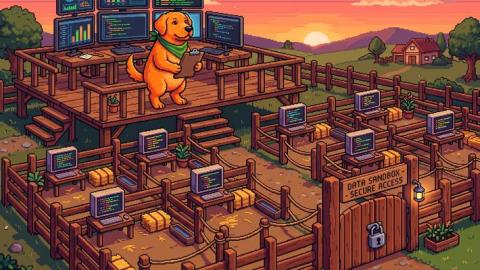
Can we live dangerously? Sandboxing Claude, and the Claude foreman that runs the rest

While logging into one’s LinkedIn will spew out endless talk of AI possibilities from “thought leaders” and the semi-disconnected alike, another pocket of the world spent the last few weeks watching the Shai-Hulud worm chew through npm. A self-propagating credential stealer that hit 400-plus packages and, delightfully, planted Claude Code and VS Code hooks so just opening the repo could run its payload.

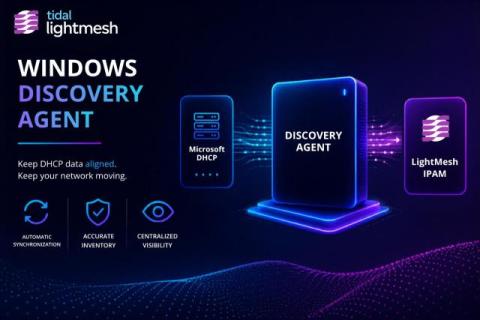
DHCP tells you what was leased. It does not tell you what is answering.

Your DHCP server knows which addresses it assigned. It does not know which of those addresses are answering on the wire right now. That gap shows up in every hybrid network where static devices, reservations, and stale leases sit beside active workloads. Leased and live are different questions. DHCP scopes answer the first. Subnet ping-sweep answers the second. Together they give IPAM fresher last-seen context without handing an NMS credentials across the network.

Live Debugging for Critical Systems: MTBF, MTTR & MTTA

A critical system has to stay reliable without new failures or added downtime, and live debugging, confirming the root cause without stopping the system, is often the only way to do that. In practice, this means having runtime context: on-demand evidence generated at the point of failure rather than logging configured months earlier, which is what keeps MTBF up, MTTR, and MTTA down.

Incident Chat and Virtual War Rooms: How to Improve Incident Response

How do you keep incident communication organized during a critical incident? Effective incident response requires more than getting an alert to the right person. Once responders are engaged, they need a shared place to exchange information, coordinate actions, and track decisions. A dedicated incident chat – or virtual incident war room – keeps that collaboration tied directly to the incident instead of scattering it across email, Microsoft Teams, Slack, text messages, and phone calls.