Operations | Monitoring | ITSM | DevOps | Cloud

How to get mobile push notifications from Spike.sh

When an issue happens in your software in production, the channel to send the alert on depends on multiple factors. If it's a critical issue requiring immediate attention, you should alert the team member via phone call. But not all issues require a phone call, and in fact it may become annoying if your phone keeps ringing for minor issues. This is where other channels like SMS, Slack and mobile push notifications come in.

4 Ways to Simplify IT Knowledge Management

The saying “knowledge is power” may be a cliché, but the truth of it holds strong, especially as it relates to IT systems and processes. With all the many moving parts in IT and the overall business, employees can often feel either bombarded with information overload or uncertain without enough. For this reason, many organizations have turned to knowledge management to provide structured processes for collecting, storing, and disseminating knowledge throughout the organization.

Pinpointing a Memory Leak For an Application Running on DigitalOcean

It can be difficult to track down memory leaks, especially when deploying apps on cloud-based application services. Often teams are left with restarting their apps as the only—and less than ideal—recourse to get them back up and running. So what do you do when your cloud-based app springs a memory leak, and how do you pinpoint the cause? In this article, we’ll create a Java app designed to purposely leak memory and deploy it to DigitalOcean.

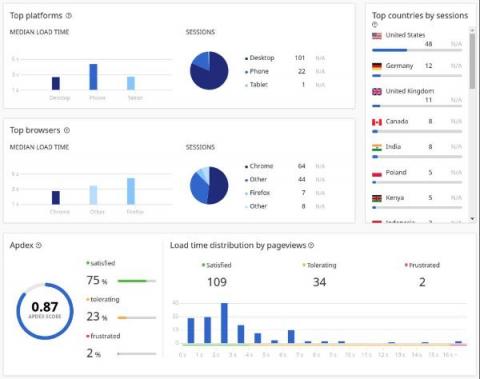
Page Load Time in E-Commerce: How to Track and Improve Key Metrics

When you’re in e-commerce, page load time is crucial. Any change you make to your site can affect it, as you’ve probably found out the hard way on several occasions. So you want to make sure your site doesn’t slow down again. Or at least that when it happens, it doesn’t go unnoticed and unaddressed for any longer than it has to. Relax—you’re in the right place. In this article, we’ll examine which metrics to track and improve to keep your site in tip-top shape.

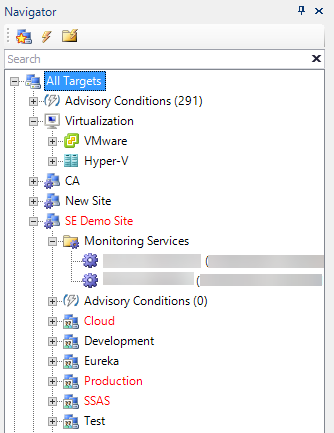
SQL Sentry Tips and Tricks: Monitoring Targets Across Multiple Domains

A frequently asked question when I’m speaking with SQL Sentry customers is, “Can I monitor targets across multiple domains?” The answer to this question is yes. Although there might be specific scenarios in which you’ll want to have multiple SQL Sentry installs, it’s possible to monitor targets across multiple domains through one install (i.e., one centralized SQL Sentry database). There are a couple of different options available to do so.

What Is Root Cause Analysis (RCA) and Why Do You Need It?

Imagine you have a hole in your car's tire. To fix it quickly and get on your way, you apply a patch. Then it happens again. You apply another patch. Before you know it, you're driving on the highway and you blow a tire. The risk was always there. You were simply hiding it because you didn't solve the problem. We see this often when it comes to IT issues. Teams take a band-aid approach to fixing problems without addressing the underlying causes.

Shy but interesting look at the history of monitoring

Close your eyes and breathe slowly, can you already feel the coolness on the tips of your boots? On the tense phalanges of your hands? The first step is right in front of you. It is a spiral staircase armed with worn ashlars under old voussoirs. The dim light of a chandelier accompanies you. What are you waiting for? Go up! The forbidden book awaits you in the last of the stays, where you will finally find out something about the history of monitoring.

Detecting threats in AWS Cloudtrail logs using machine learning

Cloud API logs are a significant blind spot for many organizations and often factor into large-scale, publicly announced data breaches. They pose several challenges to security teams: For all of these reasons, cloud API logs are resistant to conventional threat detection and hunting techniques.