The latest News and Information on Monitoring for Websites, Applications, APIs, Infrastructure, and other technologies.
Website downtime is a serious concern for businesses as it directly impacts the bottom line and can cause significant downstream effects as users turn to alternatives. You and your team can spend hundreds of hours to improve your websites, add new features, and create great content. If your website comes down at a critical moment, these efforts are wasted and users are left wondering about your business’ ability to function in the digital world.
In recent years, the rapid development of cloud-based networking, network abstractions such as SD-WAN, and controller-based campus networking has meant that basic, day-to-day network operations have become easier for non-network engineers. The result we’re starting to see today is a sort of consolidation of networking tasks, leading to a need for only a small number of highly skilled network engineers to handle the less frequent heavy lifting of advanced design and troubleshooting.
Today, businesses are generating more data than ever before. However, with this data explosion comes a new set of challenges, including increased complexity, higher costs, and difficulty extracting value. With this in mind, how can organizations effectively manage this data to extract value and solve the challenges of the modern data stack?
The outages span the giants of the Internet and some of the biggest failures of IT resilience we were subject to – from AWS’s trifecta of outages in December 2021 to the October ‘21 outage that took down Facebook, Instagram, WhatsApp, and interrelated services. We also look at some more intermittent outages that you may have missed.
Content As we already discussed in previous articles, the Kubernetes control plane is made up of a few key components playing different roles. Those are necessary to ensure both Kubernetes and applications are functional and behaving properly.
The MongoDB document-oriented database is one of the most popular database tools available today. Developed as an open-source project, MongoDB is highly scalable and can be set up in your environment in just a few simple steps. When running and managing databases, monitoring is a key requirement.
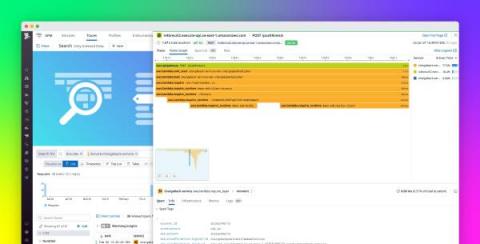
Serverless developers are undoubtedly familiar with the challenge of cold starts, which describe spikes in latency caused by new function containers being initialized in response to increasing traffic. Though cold starts are usually rare in production deployments, it’s still important to understand their causes and how to mitigate their impact on your workload.