The latest News and Information on Monitoring for Websites, Applications, APIs, Infrastructure, and other technologies.
Imagine being lost in a new place, and your maps don't help much. That sounds frustrating, right? Yet, it's precisely how your website visitors feel if you don't have functional website architecture to guide them through your content. Website architecture is the mind map that guides your visitors and search engines through the content on your website.
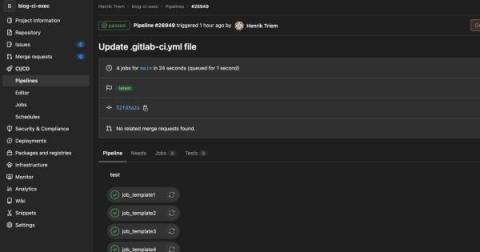
Like I’ve mentioned in my last blog post, we use GitLab pipelines for packaging. We have a lot of software, like Icinga, Icingaweb and its various modules, which we want to build across multiple different operating systems. This results in a huge number of jobs and pipelines, doing very similar stuff. We have a lot of code repetition, and this is bad – code repetition means higher code maintenance , and it invites bugs.
We all know that observability is a must-have for operating systems in production. But we often neglect our own backyard — our software release process. We noticed we made that mistake here at Logz.io. We were wasting time and energy in handling failures in the CI/CD pipeline, and made our Developer-on-Duty (DoD) shifts tedious. That’s why it’s critical to incorporate your observability practices into your CI/CD pipeline.
We are always looking for ways to improve our products and processes at RapidSpike. We’ve recently completed an upgrade to our Google Lighthouse service software to Google’s latest version 9.6.7. This required us to almost entirely rearchitect how we run the tests, which allowed us to take advantage of the latest AWS technologies. This blog post explains what this change required.
Enterprises moving to Office 365 cloud-based applications require a new approach to ensuring deployment success. Of course, your end-users should receive a fantastic application experience, whether with Teams, SharePoint, OneDrive, etc. But when problems surface with slowness or call quality, the Microsoft Service Health Dashboard provides no visibility beyond their network - leaving IT admins in the dark. Today, I'll walk through a few critical Microsoft 365 use cases for monitoring purposes and how Exoprise Digital Experience Monitoring solutions can help.
IT infrastructure monitoring as a whole picture is about keeping track of the health and performance of all the IT assets in a network environment. The network management system gathers data on various metrics, like availability, health, performance, and utilization. Then IT infrastructure monitoring transforms this data into useful statistics that help enterprises scale their businesses.
Spending two decades in the middleware field has given me deep insight into the evolution of this technology domain. I began my career as a software engineer in a platform group, building reusable components using technologies like object linking and embedding (OLE), the distributed component object model (DCOM) and common object request broker architecture (CORBA).
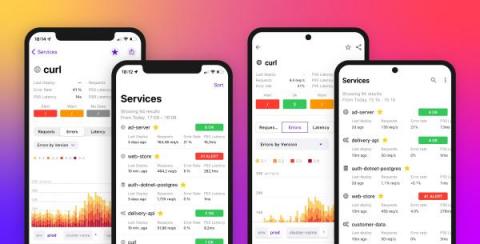
When you’re on-call for a critical service and get alerted to an issue that could impact customers, you need quick access to key performance metrics in order to effectively troubleshoot. But all too often, digging into this data requires you to switch from your mobile device to a laptop, restricting your ability to troubleshoot on the go and disrupting your routine.