Operations | Monitoring | ITSM | DevOps | Cloud

The latest News and Information on Monitoring for Websites, Applications, APIs, Infrastructure, and other technologies.

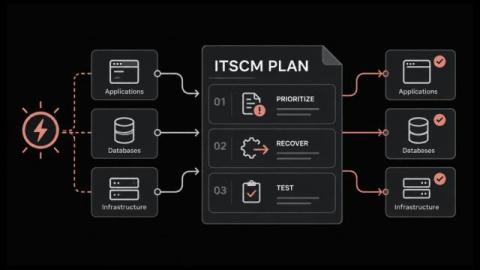
IT Service Continuity Management: How to Build an ITSCM Plan

Most IT teams have a recovery plan somewhere. It was written for a disruption that has not happened yet, and tested less often than anyone admits. The gap rarely sits in the technology. Nobody agreed which services come back first, or how fast. There was time to settle that calmly, and it went unused. IT service continuity management is the ITIL practice that settles those questions in advance. In this blog, you will: By the end you will know what belongs in an ITSCM plan and who has to agree to it.

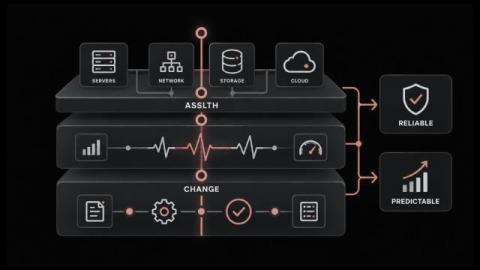
How IT Infrastructure Management Keeps Services Reliable and Costs Predictable

When a business application slows down, how fast can your organization trace the cause to a server, a network link, storage or a cloud instance? Often it comes down to who's on call that day, since asset, observability and change data are scattered across separate systems. Engineers then check each tool one at a time while customers wait and the cost of the outage grows. IT infrastructure management solves this by keeping asset records, health data and change history in order before an incident starts.

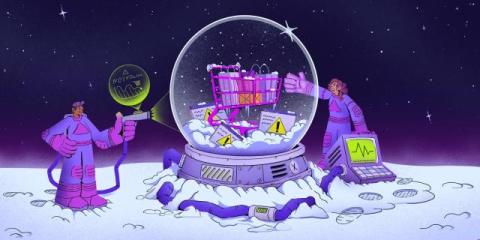
How Etsy gets its mobile apps ready for peak traffic

Most advice about surviving a traffic spike is about capacity. Scale the fleet, warm the caches, load test the checkout path. All of it assumes you can fix whatever breaks the moment you find it. Mobile apps don’t work that way. I spent an hour on a workshop with Jay Henry, a senior engineering manager at Etsy who owns engineering strategy across three teams covering CI, build, test, release, observe, and SRE. Jay’s take: a web team having a bad day can revert in minutes.

Show off your uptime with SLA badges.

Your uptime is probably better than your customers think. But the proof sits in your UptimeRobot dashboard, where only your team can see it. Starting today, you can put it on your website. SLA badges let you set an uptime target for your monitors, then embed a live badge that shows the uptime you actually delivered, colored against that target. Add it to your site footer, your docs or your GitHub README, and get the result by email at the end of each period.

How Unified Cloud Monitoring Closes Hybrid IT Blind Spots

Modern IT runs across public cloud, data centers, containers, SaaS, networks, and AI services. Cloud monitoring delivers more value when those environments share the same observability context, giving teams a clearer way to troubleshoot service issues, manage cloud spend, and support AI-assisted operations.

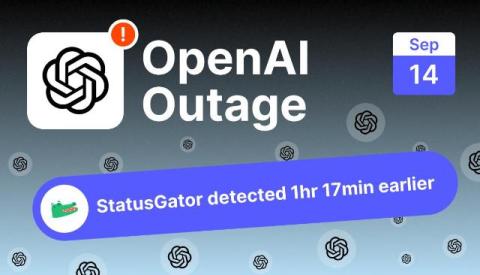
OpenAI outage on September 14, 2026: "some tools are temporarily unavailable" errors hit ChatGPT worldwide

ChatGPT’s tools and workspace features failed for users around the world on September 14, 2026, with the message “Some tools are temporarily unavailable” blocking spreadsheet and document creation, Codex, Projects, file reading, and dictation while core chat largely kept working. StatusGator sent an Early Warning Signal at 14:41 UTC, 1 hour and 17 minutes before OpenAI publicly acknowledged the incident at 15:58 UTC.

Site24x7 meets HaloITSM: Turn your monitoring alert into a HaloITSM ticket, automatically

Every IT incident response starts the same way. Something breaks, an alert fires, and someone has to act on it. The faster that chain completes, the better your team looks on the SLA reports and the less your users feel it. If you're using HaloITSM, a service desk platform built for enterprise IT operations, that chain now has one fewer link.

Security in Icinga Web: Features and Configuration Webinar

Most Icinga Web installations start with one admin account, local users and the default role. That works until the setup carries real operational weight and more than a handful of people log in. This webinar walks through the authentication and authorization features Icinga Web ships today, and shows the configuration behind each of them.