Operations | Monitoring | ITSM | DevOps | Cloud

The latest News and Information on Monitoring for Websites, Applications, APIs, Infrastructure, and other technologies.

Autonomous Endpoint Management: From Endpoint Automation to Autonomous DEX

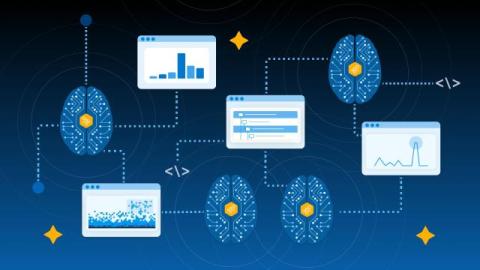
The digital workplace has outgrown the support model built to maintain it. Employees now depend on an mix of devices, applications, AI tools, and connected workflows to get their work done. As this environment becomes more complex, IT is expected to support more technology, control costs, and enable greater productivity. Traditional, ticket-driven support makes that difficult.


How Linux readahead works, and the two ways to change it

Most of the time, when we read a file, we do not think much about what happens underneath. You ask for some bytes, you get some bytes. But when getting data off the disk efficiently is at the core of what your application does, what happens underneath starts to matter a great deal, and two identical read() calls can differ enormously in what they cost. So in this post we are going to look at one of the Linux kernel’s optimizations for reading files: readahead.

Starlette 1.7.0 Brings Native Tracing and Smarter Route Naming

If you’re running FastAPI, you’re running Starlette underneath it, whether you think about it or not. At Scout, we spend a lot of time thinking about what happens at that ASGI layer, since that’s exactly where our Python agent hooks in to give you request-level visibility. Starlette 1.7.0 just landed, and it’s a release worth reading closely if you care about tracing, routing, or just keeping your app running on a supported dependency chain.

Introducing AI Ecosystem: Zoom Out to See Your Whole AI Agent Fleet

A few months ago, we launched Agent Timeline to close the gap between knowing an agent failed and understanding why. It took the tangled reality of a multi-agent, multi-trace workflow and rendered it as a single, readable conversation: every LLM call, tool invocation, handoff, and downstream system span laid out in the order they happened.

Agents Need Context: Introducing Canvas Connectors, Fleet-wide AI Agent Visibility, and More

Earlier this year, we introduced more capabilities to support agents in production, a more chaotic, complex environment that requires a tremendous amount of context to understand. Unlike tools that capture shallow, pre-aggregated metrics, or cannot join a metric, trace, and log in one query, Honeycomb retains the context and connective tissue from telemetry data to build a nuanced view of production.

Big improvements to Seer Agent

Today marks exactly five months since we launched Seer Agent, our friendly AI agent for querying all things in your Sentry projects (well, five months and a day ago, but close enough). Since then, we’ve had a lot of chats with Seer Agent. You may have even seen a few of them popping up on social media recently. It’s become an integral part of our debugging workflows and feature iteration process.

How Federal IT Teams Move to FIPS 140-3 Without Disrupting Authorization or Service Continuity

A credible FIPS 140-3 transition does more than replace an operating system. It protects authorization timelines, service continuity, rollback options, and accountability across the operational boundary.

Icinga Director v1.12.0 Release

Icinga Director 1.12.0 is out now. This release finally gives custom variables full support for dictionaries, fixes a long standing bug that broke user group restores, and raises the module’s minimum requirements to match the rest of the Icinga Web ecosystem. You can find issues and feature requests related to this release on our roadmap.

What Is Helium Used For? Key Applications and Concentration Monitoring

Most people encounter helium in party balloons, yet balloons account for only a small share of its use. The bulk of this gas goes into medicine, microelectronics, science, aerospace and welding. For many of these tasks, helium has no equivalent substitute, because no other gas offers the same combination of properties.