OnPage - ServiceNow Integration
OnPage complements ServiceNow’s ITSM software with critical alerting to lower risk, improve business agility, and reduce costs.


Having just passed the 10-year anniversary of Malcolm Gladwell’s bestseller “Outliers: The Story of Success“, we thought to mark the occasion by taking a look at outliers and how they relate to success in the business world. Gladwell describes outliers as “those [people] who have been given opportunities — and who have had the strength and presence of mind to seize them.” At Anodot, we’ve also made it our mission to spot outliers, albeit of the data variety.
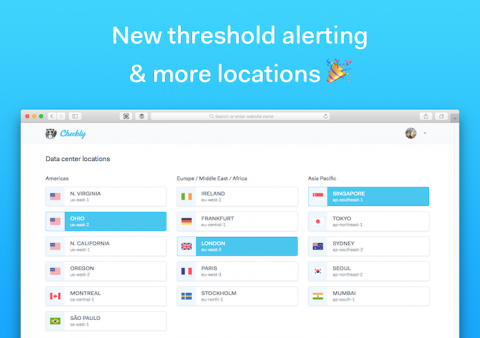
We’re super happy to announce some big upgrades to Checkly’s alerting features for 2019 . We listened to what our customers were missing alerting wise and what parts we could polish and upgrade. Two things popped up again and again...
Simple enough to be embedded in text as a sparkline, but able to speak volumes about your business, time series data is the basic input of Anodot’s automated anomaly detection system. This article begins our three-part series in which we take a closer look at the specific techniques Anodot uses to extract insights from your data.
When it comes to Software as a Service (SaaS), incident response and resolution (or there lack-of) is often the make-it-or-break-it moment for your customers that either leaves them enamored with your company culture, or dejected and looking for an excuse to leave.
Digital operational maturity is defined as an organization’s effectiveness at real-time work and ability to focus on performance metrics that improve as the organization becomes more adept at responding to incidents. Based on extensive research and nine years of industry data, in conjunction with a survey of 600+ respondents from across industries, PagerDuty developed a model that identified the four following levels of operational maturity.
A little more than four years ago, Anodot started applying advanced AI/ML and unsupervised learning technologies to simplify monitoring challenges for DevOps teams. Today our company has customers from a variety of verticals and departments harnessing our unique platform to monitor business health, user behavior, product usage, IT ops, machine learning processes and even IoT.