Operations | Monitoring | ITSM | DevOps | Cloud

The latest News and Information on Databases and related technologies.

How to Use an ER Diagram Tool to Design Relational Databases

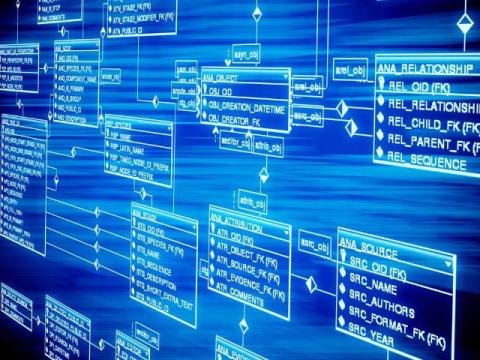
Database documentation often goes stale the same way. Someone draws a diagram during initial design and exports it to a wiki. The schema keeps changing, but the picture does not. Months later, a new engineer compares the diagram to the live database and has to work out which details are still accurate. The fix is to update documentation whenever the schema changes. An entity-relationship diagram (ERD), a visual map of tables and how they connect, can serve as both a design aid and a shared reference. It stays useful only if the team maintains it.

What is PostgreSQL? Features, uses, and benefits

The PostgreSQL database went from a platform developers respected to the one they reach for first. Today, it’s used by over 55.6% of all developers and 58.2% of professionals, powering everything from SaaS startups to AI platforms. For many new projects it’s now the default choice. But what pushed PostgreSQL ahead of so many alternatives? This guide answers that question by explaining what PostgreSQL is, how it works, and what makes it different from other databases. Table of contents.

Announcing the Flyway Docker provisioner, now in Preview in Flyway Enterprise

"Why do I need to give Flyway this extra database?" That's one of the most common blockers we hear from users setting up a Flyway project. Flyway has long had a concept of a build database or shadow database that is a dedicated sandbox database for Flyway to do background work in. It's required for Flyway to be able to simulate what running a set of migrations will do to a database.

Fabric, agents, and a security gap nobody's aware of (with Heidi Hasting) | The Simple Talk Podcast

Heidi Hasting joins host Kellyn Gorman for a chat featuring Microsoft Fabric, real-time intelligence, and a permissions trap that hands your data to a coworker's chatbot...Also: what MVP status really means, and where you should visit in South Australia (snakes included)!

What's new in Redgate Monitor: Postgres monitoring, CIS compliance, and an MCP server for AI

Redgate Monitor is a database performance and security monitoring tool covering SQL Server, PostgreSQL, MySQL, Oracle, and cloud platforms including AWS, Azure, and Google Cloud SQL. This session walks through Redgate Monitor's latest releases and roadmap: cloud cost tracking, Google Cloud SQL support, expanded Postgres diagnostics, permission-change security alerting, CIS benchmark compliance, and a new MCP server and chat assistant for AI-powered workflows.

The most expensive half-hour of an incident.

It’s not the outage, it’s the stretch before you know what actually broke In short: VictoriaMetrics Enterprise support is expertise, not a ticket queue. It’s reactive by design (you reach engineers who know the stack when something breaks), with one proactive service, Monitoring of Monitoring, that watches the health of your VictoriaMetrics observability stack (metrics, logs, and traces).

Introducing Flyway Insights: see the change, know the impact

How much of your database delivery can you actually see? For most teams, the picture is scattered. Deployment status lives in CI logs and scripts. Drift appears outside the process. And with AI multiplying the volume and speed of changes moving through pipelines, the risk that comes with low visibility rises with every release.

How to evaluate database monitoring vendors for long-term reliability and support

In this webinar, Redgate solution engineer Laura Copeland talks with Chris Yates, SVP of Data and Architecture at a large financial institution, about what separates a good database monitoring vendor from a bad one. His experience with Redgate Monitor runs through the whole conversation.

Monitor Query Costs & Verify Database Changes Automatically

See how Harness Database DevOps and DBmarlin work together to give you full visibility into query performance, automated deployment verification, and AI-assisted database change authoring - all inside your CI/CD pipeline. Most teams deploy database changes blind - they push a schema migration and hope nothing breaks. This demo shows a better way: DBmarlin surfaces the cost and performance of every query before and after a change, while Harness CV uses AI/ML to automatically detect regressions and block bad deployments from reaching production.