Operations | Monitoring | ITSM | DevOps | Cloud

The latest News and Information on DevOps, CI/CD, Automation and related technologies.

Platform Engineering 101: Origins, Goals, DevOps vs SRE & Best Practices

Platform engineering is the practice of automating infrastructure operations and enabling self-service infrastructure capabilities within collaborative Dev, Ops and QA teams. It involves designing and building platforms, technologies and workflows that enable self-service capabilities to automatically manage, provision and operate complex modern software architecture environments.

5 Essential Things Every FinOps Team Needs

Every time your company onboards a new client or releases a new product, your cloud bill will grow. In fact, it doesn’t take a large event at all to see a spike. Whenever your company changes direction even slightly, it can affect the bottom line. Add to that factors such as economic inflation and increased demand for high-speed, high-power cloud services, and it may seem like each month’s cloud bill is higher than it was before. If that’s the case for you, you’re not alone.

5 Tools for Managing a Network from a Remote Location

If you’re responsible for overseeing a network infrastructure, but you’re not always on-site to complete tasks and tackle issues in person, you need the right tools to empower you in your admin efforts. There’s a diverse array of resources out there which will enhance your network management capabilities, even when you’re working remotely. Here are just a few examples of must-have apps for you and your team in this context.

Developer environments should be cattle, not pets

Cattle, not pets is a DevOps phrase referring to servers that are disposable and automatically replaced (cattle) as opposed to indispensable and manually managed (pets). Local development environments should be treated the same way, and your tooling should make that as easy as possible. Here, I’ll walk through an example from one of my first projects at incident.io, where I reset my local environment a few times to keep us moving quickly.

Introduction to Azure Storage Service Encryption

Microsoft Azure is a leading cloud service provider that offers a wide range of storage solutions. One of its essential features is the Azure Storage Service Encryption (SSE) which helps organizations protect their data at rest. This article will dive deep into the world of Azure Storage Service Encryption, discussing various encryption types, their applications, and best practices for implementing encryption in your Azure storage accounts.

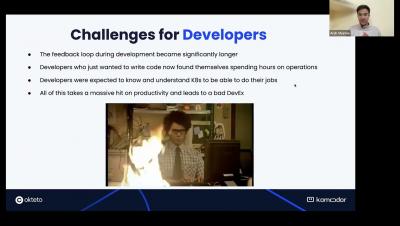
Making Kubernetes Dev-Friendly with Komodor & Okteto

Kubernetes has become the software world’s infrastructure, leading to significant changes in application architecture and packaging. Despite the introduction of new technologies and practices, they have not kept pace with the rapid growth of the K8s ecosystem. As a result, developers who once solely focused on coding are now spending hours on operations, leading to a longer feedback loop during development. They’re expected to have an understanding of Kubernetes in order to do their jobs, causing a significant drop in productivity and leading to a poor dev experience.

Anomaly Detection Using OSquery and Grafana

Detecting unauthorized usage and malicious applications in an instance involves analyzing OS and application logs. Doing this manually is a herculean effort because of the number of logs and the patterns one has to look for. Having a tool that can provide an aggregated view of your instance and the ability to analyze them easily can greatly reduce manual effort.

Cloud vs. On-Premises Backup: Which Strategy Is Better?

If you’re a business or IT leader, you have got to be ready to face data loss incidents. Because here’s the deal — any data loss incident, whether caused by a cyberattack, human error or a natural disaster, has the potential to cripple your business. Not only could your company temporarily lose access to its mission-critical information leading to downtime, but it could also lose this data permanently.