Operations | Monitoring | ITSM | DevOps | Cloud

The latest News and Information on DevOps, CI/CD, Automation and related technologies.

How to Assess Current Workloads for a Cloud Migration

Organizations large and small are taking advantage of cloud computing. This can be as simple as leveraging Office 365 or migrating all of their business applications from a data center into the cloud. We’ve all been witness to the explosive growth of cloud applications over the past several years. When organizations start considering migrating business applications to the cloud, there are many considerations, everything from security, compliance, cost, disaster recovery, and more.


Cloud storage pricing - how to optimise TCO

The flexibility of public cloud infrastructure allows for little to no upfront expense, and is great when starting a venture or testing an idea. But once a dataset grows and becomes predictable, it can become a significant base cost, compounded further by additional costs depending on how you are consuming that data.

Maximize Cloud Savings: Advanced Cost Reduction Strategies

Cloud migration can be a powerful way for organizations to reduce costs and improve efficiency. However, simply moving to the cloud is not enough - there are a number of tactics that teams can adopt to maximize cost savings. In this article, I will first explore some common tactics that cloud migration teams use to reduce costs, then share advanced strategies that our most successful customers use to truly take advantage of the cloud for all of its far-reaching benefits.

Guided Kubernetes Troubleshooting: How to Reduce Toil for Dev Teams

This blog post is a how-to guide for Kubernetes troubleshooting. Our vision is that any engineer can keep Kubernetes-based applications up and running smoothly, regardless of their level of Kubernetes expertise and their knowledge of the services in the environment. Right out of the box, StackState aims to monitor, alert and then guide an engineer directly to the problem, helping them remediate the issue quickly.

Website downtime and ways to prevent it from happening

In a modern world, every business needs to be present on the Internet, or it will literally fall behind competitors by a huge margin. And this presence in the form of a website should not only be full of useful and high-quality content, but it should also work like a clockwork mechanism from top to bottom. It must be accessible anytime to anyone from anywhere. Of course, such a thing is impossible, because of the maintenance issues, but it shouldn't hold a website owner back from aiming at the highest accessibility time possible.

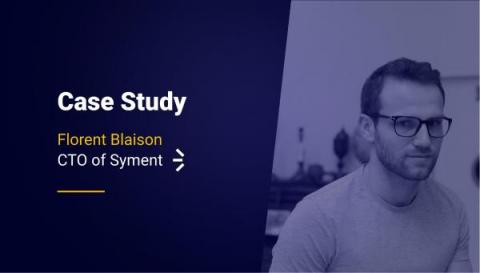
Efficiently Upgrading Infrastructure with Qovery: Syment's Success Story

Join us as we take a deep dive into the tech journey of Syment, a leading SAAS platform for property management in France. Led by new CTO Florent Blaison, with a wealth of experience in high-traffic platforms and scalability, Syment set out to overcome the limitations of their previous infrastructure. Discover how they transitioned from a mix of manual deployment and AWS's EC2 to the flexibility and scalability of Kubernetes with Qovery.

APIs Impact on DevOps: Exploring APIs Continuous Evolution

An application programming interface (API) is a set of rules and protocols that enables different software applications to communicate and share data and functionality. The concept of an API has been around for a long time. However, APIs as you know them emerged in the late 1990s and early 2000s with the rise of the internet and web-based services. As more businesses began to offer online services, the need for a standardized way for these services to interact and share data became apparent.

Challenges and Solutions with Cloud Native Persistent Storage

Persistent storage is essential for any account-driven website. However, in Kubernetes, most resources are ephemeral and unsuitable for keeping data long-term. Regular storage is tied to the container and has a finite life span. Persistent storage has to be separately provisioned and managed. Making permanent storage work with temporary resources brings challenges that you need to solve if you want to get the most out of your Kubernetes deployments.