Operations | Monitoring | ITSM | DevOps | Cloud

The latest News and Information on DevOps, CI/CD, Automation and related technologies.

Expanded Datadog Lambda extension capabilities with the AWS Lambda Telemetry API

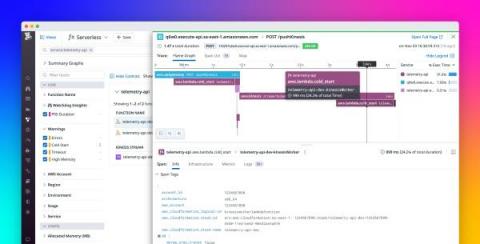
In 2021, we partnered with AWS to develop the Datadog Lambda extension which provides a simple, cost-effective way for teams to collect traces, logs, custom metrics, and enhanced metrics from Lambda functions and submit them to Datadog.

What is a Single-Line Diagram and What is It Used For?

A single-line diagram (also known as an SLD or one-line diagram) is a simplified representation of an electrical system. Symbols and lines are used to represent the nodes and connections in the system, and electrical characteristics may be included as well. In a data center, a single-line diagram is used to visualize the power distribution system to improve planning and troubleshooting, ensure redundancy, and reduce potential outages.

What is Logging as a Service (LaaS)?

Logging as a Service, or LaaS, is a proven approach to managing and monitoring high-volume log data in modern dynamic environments. LaaS allows companies to manage log data regardless of whether it comes from applications, servers, or devices. With LaaS, companies can more easily aggregate and collate data, scale and manage storage requirements, set up notifications and alerts, and analyze data and trends. It also allows teams to customize dashboards, reports, and visualizations.

How reliability testing and load testing are complementary

How can you tell if your systems are reliable when under load? A common answer is to open your observability dashboards, wait for a high-traffic event (like Black Friday), and cross your fingers. While this approach is certainly effective, it's far from ideal. Without proactive reliability and load testing, we have no idea if a system will hold up to real-world usage patterns, which could mean a production outage at the worst possible time.

Auto-scaling of Intel FlexRAN components based on MicroK8s and Ubuntu real-time kernel support

RAN has incrementally evolved with every generation of mobile telecommunications, thus enabling faster data transfers between user devices and core networks. The amount of data has increased more than ever with an increase in the number of interlinked devices. With existing network architectures, challenges lie in handling increasing workloads with the ability to process, analyse and transfer data faster. The 5G ecosystem requires virtual implementations of RAN.

A practical guide to capturing production traffic with eBPF

Monitoring HTTP sessions offers a potentially powerful way to gain visibility into your web servers, but in practice, doing so can be complex and resource-intensive. Extended Berkeley Packet Filter (eBPF) technology allows you to overcome these challenges, giving you a simple and efficient way to process application-layer traffic for your troubleshooting needs.

Sponsored Post

How to Test Autoscaling in Kubernetes

In an ideal world, you want to have precisely the capacity to manage the requests of your users, from peak periods to off-peak hours. If you need three servers to attend to all the requests at peak periods and just one server at off-peak hours, running three servers all the time is going to drive up expenses, and running just one server all the time is going to mean that during peak periods, your systems will be overwhelmed and some clients will be denied service.

Mobile Cloud Computing: Overview, Challenges and Scope

The process of delivering mobile apps utilizing cloud technology is known as mobile cloud computing (MCC). Complex mobile apps today carry out activities including authentication, location-aware features and providing users with customized communication and content. As long as your device is online, mobile cloud computing enables you to store and access data anywhere. This makes it possible for data to be sent without difficulty anytime required.

Announcing Linux Shell Runners in Bitbucket Pipelines

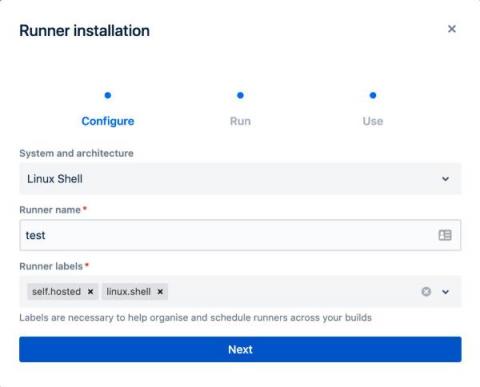
We are happy to announce that Bitbucket Pipelines now supports non-containerized Linux Shell Self-Hosted Runners. We have moved from beta to an official release. You can now create a self-hosted runner and run it on your Linux infrastructure without container restrictions. Since it is your infrastructure, you will not be charged for the build minutes used by your self-hosted runner.