Operations | Monitoring | ITSM | DevOps | Cloud

The latest News and Information on DevOps, CI/CD, Automation and related technologies.

Honeycomb, Meet Terraform

Most SaaS products have nice, organic growth when they work well. Employees log in, they click around and make stuff, then they share links with others who do the same. After a few weeks or months, there are thousand of objects. Some are abandoned, and some are mission-critical. Different people also bring different perspectives, so they name things that are relevant to their role and position in the team, which may be confusing to others outside their realm.
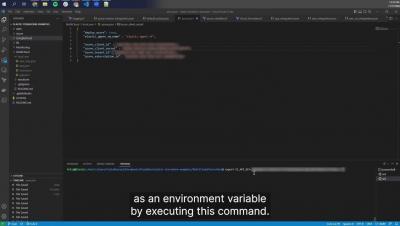

Getting started with unified observability for Azure in less than 10 minutes using terraform

This video provides a step-by-step guide on how to observe Microsoft Azure environments. This will only take about 10 minutes of working time for you to get a fully configured Elastic Cluster that is actively collecting the data of your Azure environment. Chapters: Additional Resources.

The business value of frequent deployments

We’ve written a ton of content about how to unlock the value of frequent deployments for your database as well as applications, from improved coding patterns to strategies for architecting smaller deployments. But the multi-million-dollar question for you and your business is something else entirely: what is the real business value of frequent deployments? That’s the question I’m going to address in this series of three posts.

Traffic mirroring in Kubernetes: Istio vs Speedscale

Testing in production carries a lot of risk, like possibly causing downtime for users. However, the advantages of using real user traffic are many, which has led to the popularity of traffic mirroring. Mirroring can be implemented as part of pre-deployment testing, as well as other parts of the developer experience like the development itself. But, how do you get started with it?

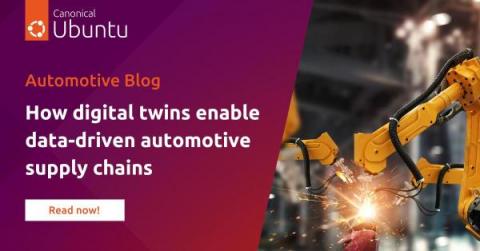
How digital twins enable data-driven automotive supply chains

The automotive industry is facing one of its biggest revolutions since the advent of automation. In this post, we will go through the Industry 4.0 aspects and how OEMs can turn these challenges into opportunities. To put it simply, the first Industrial Revolution relied on steam power, the second one on electricity and the third one on computers. What about the fourth Industrial Revolution everyone is talking about? I would describe it as a data-driven revolution.

Sponsored Post

On-Premises vs Cloud MDM deployment: Key Differences between them

On-premises vs cloud MDM deployment With the rise of SaaS application management, mobile device management (MDM) services have gained popularity among IT professionals. Modern computing environments rely on the efficient use and provisioning of resources. But which one is right for your business: on-premise or cloud MDM deployment? While this may seem like a simple question, there are many factors that come into play when deciding which method to go with. This article discusses the differences between on-premises vs. cloud MDM deployment. It will also present examples, use cases, and pros and cons of these two deployment options.

Sponsored Post

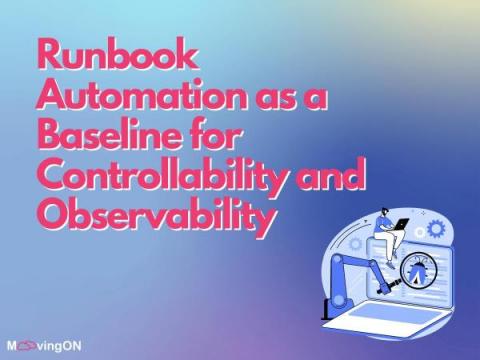
Runbook Automation as a Baseline for Controllability and Observability

Some of the highest priorities for engineers - from NOC Engineers, DevOps & Site Reliability Engineers - are the automation and optimization of their production environments. Many companies today face tough challenges with their Network Operations Centers (NOCs) or production environments. These challenges fall into the hands of engineering teams.

How we approach integrations at incident.io

If you pick a random SaaS company out of a jar and go to their website, chance are they integrate with another tool. Typically, the end goal of integrations is to meet users in the middle by working with other tools they’re already using on a day-to-day. Put another way, integrations are a strategic business decision. But the question remains: why don’t companies just build a tool with similar functionality in order to make the product stickier?

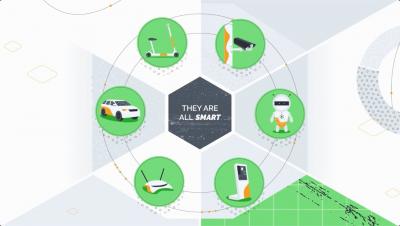
JFrog Connect IoT Device Management Solution

JFrog Connect is an all-in-one platform to manage, update, control, monitor and secure remote Linux & IoT devices, at scale, with the click of a button. New products are being developed all the time, and in today's world they are all smart, connected with complex software. Save development time with the first plug and play device management platform for connected devices - with all the necessary tools and features to manage and maintain the product fleet remotely. Including over the air update tools, remote debugging, monitoring and securing.