The latest News and Information on DevOps, CI/CD, Automation and related technologies.
When you are the only dev building a software project, you can create and modify your code according to personal preference. When you contribute code to a team-run project, you need to follow a standardized set of guidelines and coordinate precisely with other team members. Standard guidelines and coordinated work effort are vital to the success of every team-based software development project.
Implementing change in an organization always has its challenges, and for it to be successful it requires support from executive management. For one of our large Managed Service Provider (MSP) clients, their new CIO was focused on making their customer’s cloud consumption more efficient, with the outcome being cost savings.
Audit Logs automatically record all user activities across all of your applications and team members. Audit Logs provide all the information you need to assess changes made to your account, such as IP address, date and time (displayed in your timezone), geo-location (accurate to the city), and the team members involved.
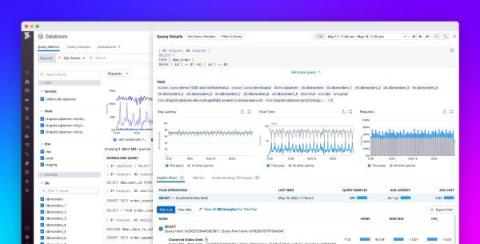
Datadog Database Monitoring (DBM) provides comprehensive visibility into SQL queries running on your databases. Using DBM, you can troubleshoot database performance issues by drilling into frequently used queries and analyzing historical trends in your queries’ metrics and execution plans. Whether you operate self-hosted SQL Server instances or leverage Azure’s fully managed services, DBM can provide deep visibility into the databases your application depends on.
There are a number of lessons I learned guiding weeks-long backcountry leadership courses for teens that I carried with me into my roles in incident management. In this blog post, I’ll share three that stand out.
Kubernetes shouldn’t be reserved for production. Using local Kubernetes in development means you can build and test your service using the same technologies as your live deployments. Some organizations provide a shared Kubernetes cluster for development activities. Others offer on-demand virtual clusters that serve staging environments for significant changes.
The software industry is moving toward teams that own the services they build. This concept encloses principles and possibilities from movements toward microservices, DevOps, Agile, and Project to Product. In these paradigms, a team of people delivers software that provides valued capabilities. These capabilities help customers get their work done, support business operations, or enable other software to do these.