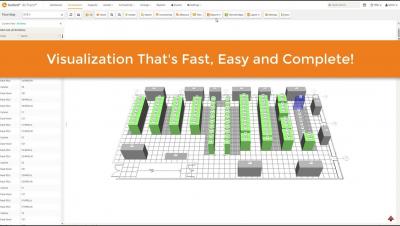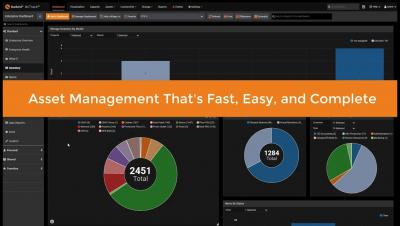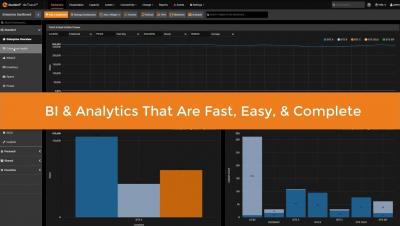
dcTrack 7 BI and Analytics
Sunbird’s dcTrack DCIM Operations software provides data center business intelligence and visual analytics that are easy, fast, and complete.


The latest News and Information on DevOps, CI/CD, Automation and related technologies.
Amazon RDS allows you to easily run databases in AWS without actually having to manage database servers. Since your databases are critical to the health of your application, properly monitoring RDS is a top priority for most teams. In this blog post, we will go over how Blue Matador monitors RDS automatically and without configuration.
Today I am very excited to announce that Rancher Labs’ Project Longhorn has been accepted by the Cloud Native Computing Foundation as a sandbox project. Many Kubernetes users still find it challenging to run stateful workloads and manage persistent storage. Longhorn aims to help you manage stateful workloads in Kubernetes by providing a solution for persistent storage that you can easily deploy, use, and manage.
IDC predicts a ten-fold increase in data by 2025, which should surprise just about no one. We are all producing more and more data every day—more data than ever before, with no slowdown in sight. Recently we joined forces with our friends over at CHAOSSEARCH to deliver a webinar on the topic of Big Data Done Right—How to Spend Less While You Store & Analyze More. In this webcast, we discussed some best practices around big data storage, transfer, and access.
Since Kubernetes was open sourced by Google in 2014, it has steadily grown in popularity to become nearly synonymous with Docker orchestration. Kubernetes is being widely adopted by forward-thinking organizations such as Box and GitHub for a number of reasons: its active community, rapid development, and of course its ability to schedule, automate, and manage distributed applications on dynamic container infrastructure.
Digitalization is sweeping across many industries, creating a huge need for innovation. This innovation forces companies to be more agile and deliver faster. However, increasing the speed of your development team doesn’t happen by magic. It’s a metric that isn’t easy to change. How can you adjust to this fast-paced digitalization? I want to introduce you to DevOps.