Operations | Monitoring | ITSM | DevOps | Cloud

The latest News and Information on DevOps, CI/CD, Automation and related technologies.

TLS 1.2 isn't end of life, but it will be soon

You’re probably running a TLS configuration that the IETF says is “non-conformant”. But you didn’t do anything wrong. In July, the IETF published a pair of RFCs that took away three of TLS 1.2’s key exchange methods and froze the rest of it. The phrase they used is MUST NOT, the strongest thing a specification is allowed to say. Nginx, Apache, and Windows Server all ship with those key exchanges turned on by default. Nothing breaks tomorrow.


AI Was Supposed to Mean Working Less. For Some Developers, It's Doing the Opposite.

AI coding tools were supposed to mean developers work less. On a recent webinar recorded with LeadDev, senior engineering manager Vernon put words to something a lot of teams are quietly noticing instead: “It’s concerning because it’s the opposite of what was promised. We were supposed to be working less.”

What AI compresses, and What it Amplifies

Adam Berman, VP of Engineering at Semgrep, on the double edge of AI tools for engineering leaders: they compress the distance between an idea and a working prototype, letting him get from exploration to a demoable POC in the gaps between meetings. But that same leverage amplifies risk. One person can spin up 1,000 unowned problems just as fast as they can spin up 1,000 wins. From a Braintrust by Cortex conversation on how AI is changing the job of engineering leadership.

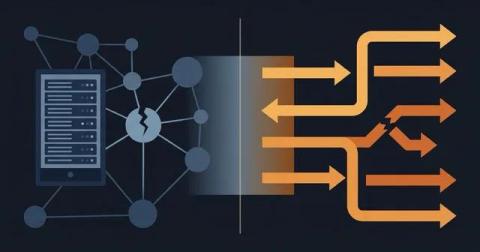
What is a Tier 1 IP backbone, and why does it matter?

Every time you join a video meeting, move data between cloud environments or use an AI-powered application, your traffic travels across a complex network of interconnected infrastructure. At the heart of this global ecosystem sits the internet backbone – and the highest-performing networks within it are known as Tier 1 IP backbones.

What build-versus-buy actually looks like in agentic engineering

Most build-versus-buy debates assume you're choosing once, at the start, and living with it. Agentic engineering doesn't work that way. The decision shows up at every layer of the stack, and the teams getting it right aren't the ones who picked "build" or "buy" as a philosophy. They're the ones who know which layer is which.

Kepler: Coordinate Every AI Coding Agent From One Place

Kepler is GitKraken's new agentic development environment (ADE), and it's now in public preview for Windows, Mac, and Linux. If GitKraken Desktop is built to go deep on one repository, Kepler is built to go wide: one task, multiple repositories, multiple AI agents, tracked in a single place instead of a dozen open terminals.

Europe Can't Find 5 Gigawatts. So It Gets Creative | Ben Baldieri, Founder of The GPU

Everyone is talking about multi-gigawatt AI data centers. Europe is solving a different challenge. In this episode of Uplink, Michael Reid sits down with Ben Baldieri, Founder of The GPU, to explore how power constraints, fragmented regulation, and limited grid capacity are reshaping Europe's AI infrastructure landscape.

Chaos Monkey Won't Find Your Bug

We shipped a chaos feature that never caused any chaos. Our mock server has had a fault-injection effect for years with a straightforward job: withhold the response entirely and see whether the caller copes. Last week I audited it against the actual code path. It had never withheld anything. The handler returned early without writing a response. Go’s net/http then did what it is designed to do, which is synthesize a 200 OK and flush the recorded body.

Chart Annotations: Pin the Deploy, the Incident, or the Config Change Right on the Chart

A chart shows you that CPU jumped at 15:57. It doesn’t show you that a deploy went out at 15:56. Chart annotations let you pin a note to the exact moment on a chart, and it stays there for everyone in your Space, permanently, the next time anyone looks at that chart.

Your Framework Doesn't Have to Be on Our List: How MCP Server Deployment Changes Everything

To deploy an application we haven't seen before, we need two things out of its repository. One is a Dockerfile that builds it. The other is a service definition saying what runs, which ports it listens on, which databases it needs, and what environment variables it expects. Customers arrive with a git URL, and we figure out the rest. We even do the tricky task of generating a Dockerfile if it doesn't already exist in the codebase. We've built a solution for this twice already.