Operations | Monitoring | ITSM | DevOps | Cloud

The latest News and Information on Monitoring for Websites, Applications, APIs, Infrastructure, and other technologies.

Expand your monitoring reach with the Datadog Marketplace

The Datadog Partner Network (DPN) is a rapidly growing registry of hundreds of leaders in the cloud service industry who choose Datadog to meet their infrastructure-monitoring needs. Partners are well-acquainted with the more than 400 technology integrations available to Datadog customers, but with the huge diversity in technical stacks used by our customers, there’s always demand for more customization and flexibility.

Enable preconfigured alerts with Recommended Monitors

Datadog’s more than 400 integrations collect monitoring data from across your entire stack, giving you full visibility into the health and performance of your applications and infrastructure. Alerts are a crucial part of any monitoring workflow, as they draw your attention to problems in your system before they affect your users. But whether you’re migrating to a new environment or integrating a new technology into your stack, it’s not always clear what data you should alert on.

Introducing Datadog Compliance Monitoring

Governance, risk, and compliance (GRC) are major inhibitors for organizations moving to the cloud—and for good reason. Cloud environments are complex, and even a single misconfigured security group can result in a serious data breach. In fact, asset misconfigurations were the leading cause of cloud security breaches in 2019. This puts a lot of pressure on developer and operations teams to properly secure their services and maintain regulatory compliance.

Dash 2020: Guide to Datadog's newest announcements

Today, at Dash 2020, we unveiled new products and features on the Datadog platform that provide engineering teams with even deeper visibility into their distributed applications and infrastructure. With these additions, Datadog further streamlines every step of your release cycle, from shift-left testing in your CI/CD pipelines to profiling your code in production.

AppSignal Ruby Gem 2.11: Active Job and Friends

We just released Ruby Gem 2.11. We are always making things easier to use for you, so more things work out of the box and more instrumentation and dashboarding is built without you doing any heavy lifting. This release has a big overhaul of Active Job support. The cherry on the stroopwafel cake is the automatically generated dashboard with status per queue, queue throughput and queue times. 2.11 also polishes a lot of other integrations. Let’s dive in.

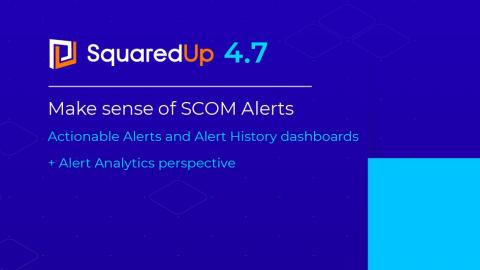
Make sense of SCOM Alerts with SquaredUp 4.7

One of the most common complaints about SCOM is the noisiness of alerts from Management Packs. Getting on top of these alerts can be a huge challenge and often the thing that most gets in the way of an organization getting value out of SCOM. In SquaredUp for SCOM 4.7, our recent feature-packed update, we bring you three new alert-handling super-powers to help you get on top of alerts.

New in Grafana 7.1: Gain new data insights with InfluxDB and Flux query support

The audience was buzzing when Ryan McKinley, VP of Innovation at Grafana Labs, demoed the new native support for InfluxDB Flux queries in his talk at the InfluxDays virtual conference in late June. Whether the goal is to build IoT applications, or monitor DevOps infrastructure or another application or system, it’s important to move beyond just visualizing the data.

How to optimize your logging costs

CIOs see data costs as their greatest logging challenge to overcome, according to this survey we collaborated on with IDC. If you’re running significant production operations, you’re almost certainly generating 100’s of GB of log data every day. Naturally, you’re also monitoring those logs and querying for incident investigations. However, most log data is never queried or analyzed, yet makes up the majority of logging costs.

Ensuring Availability and Security for Remote Workers

The year 2020 has seen various changes throughout the world but no change has seen more of an impact than the Corona-virus. During this epidemic, workers from all industries have moved from a traditional office-based role to WFH (Working From Home). It’s known as a business transforms it brings new risks associated with it. New and emerging technologies and the practices they involve require operational, policy and security measures to be implemented and evolved over time.