The latest News and Information on Distributed Tracing and related technologies.
TL;DR: proposal (and a survey) to deprecate native Jaeger exporters in OpenTelemetry SDKs in favor of OTLP exporters.
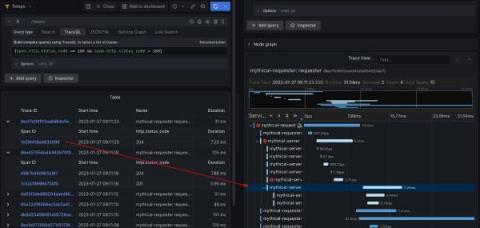
At ObservabilityCON, we announced our first step towards launching a native integration between Grafana k6 load testing and Grafana Tempo tracing (k6 x Tempo) in Grafana Cloud. We created k6 x Tempo to help dev, testing, and operation teams analyze their performance test results more effectively and proactively improve the reliability of their business-critical applications.
Have you been meaning to learn about OpenTelemetry and the integration of all available application and service telemetry? If you like to learn things by doing; get ready to dive in and have some fun with OpenTelemetry and Splunk Observability Cloud. Quickly learn more about OpenTelemetry auto-instrumentation and collectors at your own pace with these walkthroughs and guides.
With serverless and containerized applications becoming a norm, workloads and integrations are spread across multiple cloud environments. As these apps become increasingly more distributed, monitoring also becomes more complicated with siloed and incomplete telemetry. This is where distributed tracing brings great value. It enables end-to-end visibility in your modern and complex application.
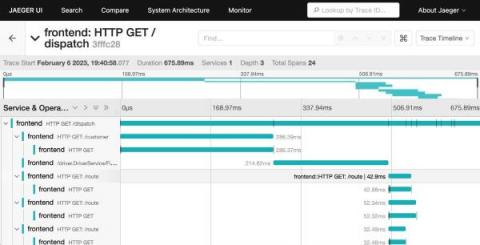
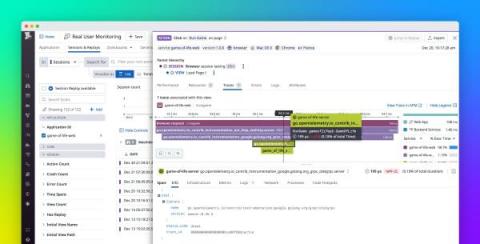
Distributed tracing is the ability to follow a request through a software system from beginning to end. While that may sound trivial, a single request can easily spawn multiple child requests to different microservices with modern distributed architectures. These, in turn, trigger further sub-requests, resulting in a complex web of transactions to service a single originating request.
Written by Liz Fong-Jones and Phillip Carter. OpenTelemetry, also known as OTel, is a CNCF open standard that enables distributed tracing and metrics collection from your applications. At Honeycomb, we believe that OpenTelemetry is the best way to ingest the high-cardinality and high-dimensional data that every system, no matter how complex or distributed, needs for observability.
Microservices architecture is the new norm for building products these days. An application made up of hundreds of independent services enables teams to work independently and accelerate development. However, such highly distributed applications are also harder to monitor. When hundreds of services are traversed to satisfy a single request, it becomes difficult to investigate system issues.