Operations | Monitoring | ITSM | DevOps | Cloud

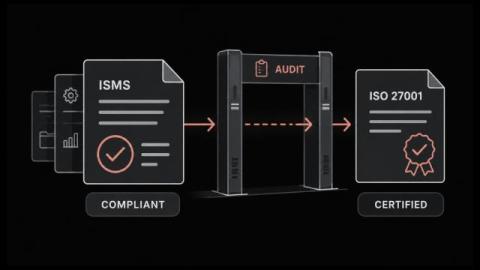
Megaport Achieves SOC 2 Type 2 Compliance

Here’s how Megaport’s new certification gives customers more confidence in the security, availability, and reliability of our platform. Trust is built into infrastructure long before anyone notices it. It sits behind the login screen, inside the change process, across the controls that keep systems protected and services available. It shows up in the quiet, operational work that customers rarely see but rely on every day.

How to patch 40 Drupal sites without 40 manual deployments

Standardizing the fleet: automated updates for multi-site management There's a specific kind of update that Drupal agencies and enterprise teams dread: a security release in something the whole fleet runs on, the PHP runtime, the database engine, or a shared service, with a patched version available now and a deadline attached. For a team managing a single site, moving to the patched version is an afternoon of work.

Building an open source chain of trust: new research uncovers key blockers and ways forward

Canonical is pleased to share its latest research report, “The open source chain of trust.” Based on a survey of 500 DevOps professionals, the report highlights how organizations approach their open source software supply chains. While many companies are moving toward verifiable provenance and automated security workflows, internal misalignment and disjointed approaches remain serious challenges for most teams. Read the report.

Beyond safety and security: Why automotive open source demands dependability

In the traditional automotive world, teams often work in silos: the cybersecurity experts lock down the ports, the quality assurance teams hunt for bugs, and the functional safety engineers track the ISO 26262 compliance. At Canonical, we believe this fragmented workflow causes friction rather than collaboration. You cannot have a safe vehicle that isn’t secure, and you cannot have a secure vehicle running on poor quality code. This friction results in a slow and rigid development process.

Shipped: Give your Explorer filters & groupings room to scale

The controls at the top of Explorer are great for a simple question. But as your query grows with more group-bys or a stack of filters, those controls start eating into the vertical space you actually want for your data. Now you have the option to move filters and groupings into a dedicated left side panel, so a complex query has room to scale cleanly. Set it once and CloudZero keeps it that way.

GPT-4 API cost 2026: pricing breakdown and how to estimate it

GPT-4 API pricing spans $0.10 to $30.00 per million input tokens across the model family. GPT-4.1 is the current recommended production model at $2.00 input / $8.00 output per million tokens. Legacy GPT-4 still runs at $30.00/$60.00 per million tokens -- 15x more expensive for no meaningful quality gain. For finance and engineering leaders accountable for AI spend, choosing the right GPT-4 variant is the single biggest cost lever on your bill.

ActiveMQ Backup and Disaster Recovery: Complete DR Guide

A message broker's backup and disaster recovery plan is the last line of defense against scenarios that HA cannot address: a full datacenter outage, catastrophic hardware failure that destroys both primary and secondary nodes, accidental message deletion, or KahaDB corruption that prevents the broker from starting.

ActiveMQ JVM Memory & GC Tuning: Heap Sizing, G1GC, ZGC Guide

The JVM is the runtime foundation of every ActiveMQ deployment. Message throughput, delivery latency, producer flow control triggers, OOM crashes, and GC-induced delivery pauses all trace back to JVM memory configuration. Yet ActiveMQ ships with a 512MB heap and no GC logging, appropriate for a developer laptop, not for an enterprise message broker handling millions of messages a day.

One SSL certificate on multiple servers

Every certificate renewal automation tool has to answer one architecture question before it does anything else: where does the private key get generated? A reader who used to be “the certificate guy” at his organization emailed me this week to ask about exactly that: It’s the right instinct. It’s also how most automation tools work. Certbot generates the key on the server, builds a certificate signing request, and the private key never leaves the machine.