Operations | Monitoring | ITSM | DevOps | Cloud

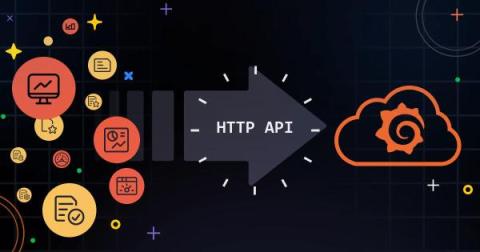
Visualize Sumo Logic metrics and logs with Grafana: Introducing the Sumo Logic Enterprise plugin

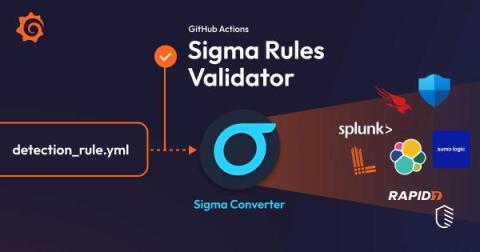
We are thrilled to announce the addition of a powerful new Enterprise plugin in the Grafana ecosystem: the Sumo Logic Enterprise data source plugin for Grafana. You can now easily connect Sumo Logic to your Grafana instance and correlate your log data with telemetry from all your data sources in one unified Grafana dashboard.

OpenTelemetry and Grafana Labs: What's new and what's next

A new year is a natural time to reflect on past achievements — and consider future aspirations. When I think about the observability space, specifically, in 2023, OpenTelemetry felt omnipresent. It was a hot topic at every industry event, with at least one dedicated talk at ObservabilityCON, Monitorama, PromCon, and KubeCon + CloudNativeCon, both NA and EU. A notable highlight from KubeCon was OpenTelemetry going GA, marking a significant milestone in the project’s development.

Why companies migrate from OSS to Grafana Cloud for metrics management

In 2022, we introduced Grafana Mimir, the most scalable and performant open source time series database in the world. And since its launch, we’ve been busy, increasing Mimir’s scale, making it easier to get started, and boosting query performance. But even with these advancements, we understand the challenges that can come with a self-hosted and self-managed OSS tool.

How to improve your observability strategy: Introducing the Observability Journey Maturity Model

While many segments of the IT market move quickly, the observability space seems to move at lightning speed. Fueled by open source innovation, observability toolsets and best practices constantly evolve. Sometimes, it can be tough to keep up — and even tougher to know where your own observability strategy stands. That’s the exact challenge we aim to address with our new Observability Journey Maturity Model.

Inside TeleTracking's journey to build a better observability platform with Grafana Cloud

Oren Lion, Director of Software Engineering, Productivity Engineering, and Tim Schruben, Vice President, Logistics Engineering, both work for TeleTracking, an integrated healthcare operations platform provider that is Expanding the Capacity to Care™ by helping health systems optimize access to care, streamline care delivery, and connect transitions of care.

How to manage Grafana instances within Kubernetes

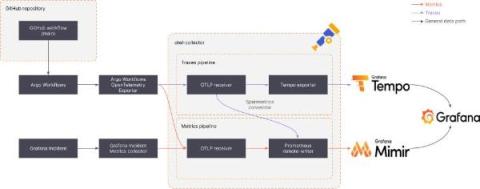
If you’re using Grafana and Kubernetes, we’ve got exciting news — Grafana Labs will be maintaining and managing the Grafana Operator, the open source Kubernetes operator that helps you manage your Grafana instances within and outside of Kubernetes. This significant move not only elevates the Grafana Operator to an officially supported tool but also cements its place as a staple for managing Grafana as code, especially for users keen on adopting GitOps principles.

Grafana Beyla 1.2 release: eBPF auto-instrumentation with full Kubernetes support

We’re excited to announce that with the release of Grafana Beyla 1.2, Kubernetes support is now fully integrated. With this update, the Grafana Beyla configuration now “understands” Kubernetes semantics to provide a more fine-grained selection of services to instrument. Beyla users can decorate metrics and traces with the metadata of Kubernetes entities, such as pods and deployments, that run the automatically instrumented services.

Grafana 10.3 release: Canvas panel updates, multi-stack data sources, and more

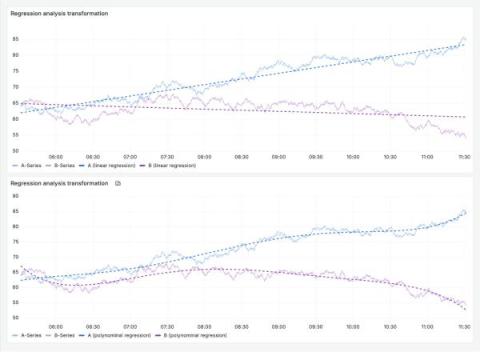
Grafana 10.3 is here! Download Grafana 10.3 The latest version of Grafana brings advanced controls for anonymous access in your Grafana instance and new options for multi-stack data source configuration in Grafana Cloud. The release also enhances Grafana visualizations, with additions like pan and zoom for the canvas panel and updated tooltips for better data interpretation. Plus improvements in Grafana Alerting and log analysis capabilities provide more efficient monitoring and troubleshooting tools.

Accelerate TraceQL queries at scale with dedicated attribute columns in Grafana Tempo

With Grafana Tempo 2.3, we introduced a new storage format (vParquet3), which enabled an exciting new feature (dedicated attribute columns) that focused on the read path. Dedicated attribute columns offer a wide range of benefits primarily centered around query performance and memory usage. These columns can improve read speed across most queries, and they can have a major impact on resource utilization.

How to monitor a MySQL NDB cluster with Grafana

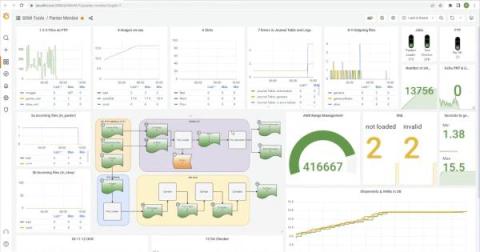
Jason Mallory is a senior MySQL/SQL server database administrator who develops monitoring and alerting solutions for operations departments in the aerospace industry. Jason is also a Grafana Champion. MySQL Network Database — or NDB, for short — is an in-memory, sharded database platform. Consisting of several moving parts, NDB can be one of the most challenging database platforms to monitor. However, monitoring NDB cluster health is crucial to ensure reliability and performance.