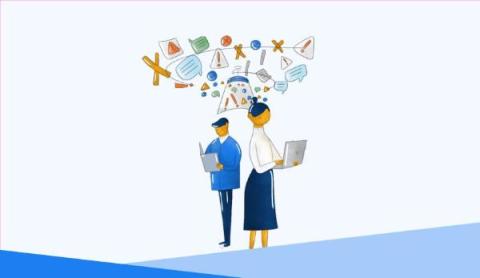
“Isn’t observability just a fancy term for monitoring?” That’d be the response from most IT folks a few years back if you asked them about it. And here we are in 2023, where Observability now is as imperative a term as security itself.
Bandwidth Monitoring is a vital function essential for the smooth flow of data and business success in the digital landscape. Many businesses, individuals, and data centers use networks to share information or services with each other. However, at times customers may experience poor results from unreliable connections, but these problems could also be signs of more serious network problems.
In an era where cybersecurity threats are not just frequent but increasingly sophisticated (and becoming more costly), the need for robust defense mechanisms has never been more critical. Security Information and Event Management (SIEM) emerges as a cornerstone in this complex data environment. It’s not just another tool in your cybersecurity toolkit; it’s a solution designed to elevate your organization’s security posture.
On a retail floor, there's a shopper with a question about product availability. And there’s a store associate with the opportunity to answer, creating a sale and building loyalty. In a distribution center, a picker carefully lifts a fragile item out of a bin and places it in a tote. They confirm the item visually through an image presented in the picker’s application workflow. The order will be fulfilled accurately.
Understanding your AWS S3 billing is crucial to effectively manage and reduce your costs. Charges in AWS S3 are primarily based on three factors: the amount of data you store, the number of requests you make, and data transfer fees. Storage costs are calculated per gigabyte (GB) stored, which are tiered depending on the total size of your data. Requests costs are incurred with each put, get, or list operation on your objects, with prices varying based on the type of request.
Choosing, deploying, maintaining, and rationalizing observability and monitoring tools can be a constant challenge for ITOps, DevOps, and SRE teams. As teams monitor increasingly complex systems, the need for instrumentation that monitors those systems grows at the same rate, leading directly to a growing problem of observability data engineering, integration, and enrichment.