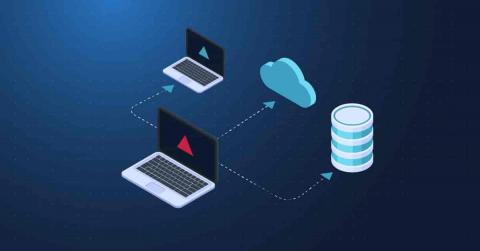
Hard drive crash. Ransomware. Equipment failure. Accidental deletion. Theft. There are plenty of reasons why end users want to have a secure and up-to-date backup of their most important files. And there are just as many approaches to backup and recovery as there are reasons to want it in place. In this article, we’ll discuss practical strategies and best practices for backing up important data, including consumer-level options and how to get the most from an enterprise-grade backup solution.
A lot of organizations are using Grafana to visualize information and get notified about events happening within their infrastructure or data. In this article, we will show how to create and configure Grafana Alert rules. To get started, log in to the MetricFire free trial, where you can send metrics and make Grafana dashboards right on our platform.
If you’re an engineer trying to fix real problems with your apps, looking at just one small part of the picture isn’t going to cut it. This is why Kentik is so focused on helping you understand what’s going on beyond single k8s instances, and it’s a big part of what network observability is all about. This was Kentik’s message at Kubecon 2022, which was a memorable event for us.
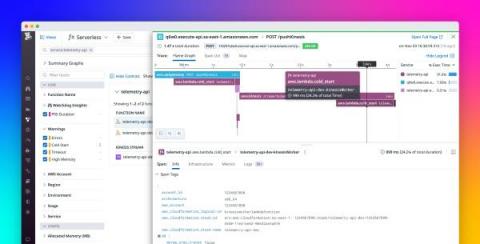
In 2021, we partnered with AWS to develop the Datadog Lambda extension which provides a simple, cost-effective way for teams to collect traces, logs, custom metrics, and enhanced metrics from Lambda functions and submit them to Datadog.
Observability in serverless computing environments, such as AWS Lambda, has always been a challenge.
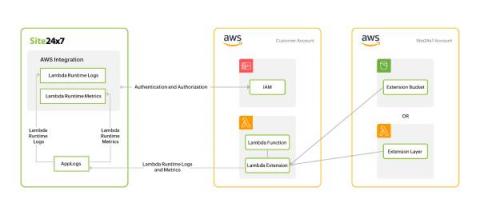
The Lambda Telemetry API empowers users to integrate monitoring and observability tools like Site24x7 with their Lambda functions. Site24x7 is an AWS-reviewed Lambda Service Ready Program Partner and is announced as a launch partner in AWS Lambda Telemetry API feature release. Customers, AWS partners, and the serverless community can use the Lambda Telemetry API to receive telemetry streams from the Lambda service, including function, extension logs, and metrics coming from the Lambda platform.
A single-line diagram (also known as an SLD or one-line diagram) is a simplified representation of an electrical system. Symbols and lines are used to represent the nodes and connections in the system, and electrical characteristics may be included as well. In a data center, a single-line diagram is used to visualize the power distribution system to improve planning and troubleshooting, ensure redundancy, and reduce potential outages.
There are a ton of leaves in my yard, and I’m slowly coming out of a weeklong sugar coma. That can only mean October has come and gone. Let’s take a peek at what new and noteworthy changes Honeycomb has made since we last checked in.