Operations | Monitoring | ITSM | DevOps | Cloud

What is Supercloud? What to consider when monitoring and observing a Supercloud?

In recent months the term “Supercloud” has become increasingly used, particularly in the context of being a successor or qualifier to “multi-cloud”. There isn’t any definitive formal definition, it is essentially yet another buzzword and vendors and analysts are pilling in with their own take and definition to align to their own agendas and product capabilities.
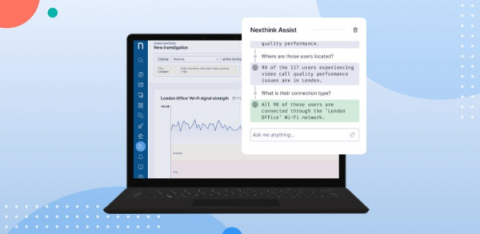

Democratizing Digital Employee Experience with Nexthink Assist

Artificial Intelligence and Machine Learning have been at the heart of our strategy since the beginning. At the birth of Nexthink we wanted to help IT teams not get drowned in list of logs, but rather immediately see actionable data already processed, correlated and ready to consume.

How Financial Institutions Benefit from Automated Employee Offboarding

Thanks to the economic downturn and rising interest rates, leading financial industry stalwarts such as Accenture, BlackRock, BNY Mellon, Goldman Sachs, and PayPal have already laid off hundreds or thousands of employees. And these are just the big names; banks, credit unions, insurers, and private equity firms of all sizes worldwide are carefully reviewing their headcount and trimming their workforce in order to stay competitive.

Amazon S3 Cost Optimization: 12+ Ways To Optimize Your S3 Costs

The Amazon Simple Storage Service (Amazon S3) is a cloud storage platform that provides highly scalable, low-latency, and relatively affordable cloud storage. Plus, developers can use S3 to save, archive, and retrieve data anywhere on the web at any time with a user-friendly web interface. Amazon S3 is a simple key-based object store you can use to store any type of data, structured or unstructured.

Monitoring Multi-Cloud and Hybrid-Cloud Infrastructures: Challenges and Best Practices

The advent of multi-cloud and hybrid-cloud architectures has created new opportunities for organizations to leverage best-in-class features from various cloud service providers. However, these complex environments present their own unique challenges, especially when it comes to monitoring and managing performance.

10 Best Practices When Logging in Python

In the eternal hunt for elusive bugs, logging is an indispensable aid. By recording the events and messages that occur during the execution of your program, logging opens the door to unparalleled debugging and performance monitoring capabilities. It all starts with Python’s built-in logging module. However, the true power of Python logging is unlocked not merely by using it, but by mastering it.

How DevOps is shaping Financial Services #4: The rise of cybersecurity

In this series of blog posts, we speak with database professionals from financial services organizations around the world to better understand how DevOps is shaping the sector. On the way, we dig into key current factors including the rise of technology upstarts in fintech and insurtech, the speed of digital transformation, and the ever-increasing threat of cyberattacks.

The True Cost of Ignoring Internet Performance Monitoring

The financial impact of Internet outages on businesses is well recognized. Yet, the exact cost remains difficult to gauge due to the individual nature of each company, its environment, the industry, risk tolerance, and so on. A significant breakthrough in understanding this cost has been achieved through a recent commissioned study conducted by Forrester Consulting on behalf of Catchpoint, entitled, Increase Revenue with Internet Performance Monitoring.

How Visibility Makes Empathy Easier, From the IT Desk to the End-User

It’s safe to say that modern working conditions have changed the way IT teams interact with end-users. Remote work has lengthened the distance between users and the help desk in the literal sense. So how can we make sure that there is good rapport between IT and the users they work hard to keep productive? Network visibility can help.