Operations | Monitoring | ITSM | DevOps | Cloud

Is a multicloud strategy right for your organization?

For the last few years, many development teams have replaced traditional data centers with cloud-hosted infrastructure. Cloud adoption continues to grow, and teams are updating applications to leverage cloud-based services. But for many organizations, adopting a single cloud provider to host all their applications and data can put their business at risk. To reduce these risks, some organizations are distributing resources across multiple cloud providers in a specifically designed way.
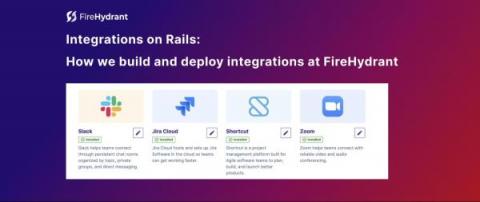
Integrations on Rails: How we build and deploy integrations at FireHydrant

Implementing integrations without a mountain of technical debt can be challenging. But it doesn’t have to be all bugs, burn out, and outages when shipping integrations at a high volume. We’ve unlocked a pattern at FireHydrant to rapidly build and release integrations without swiping the technical debt credit card each time — and that gave us a fastlane to building premier integrations.

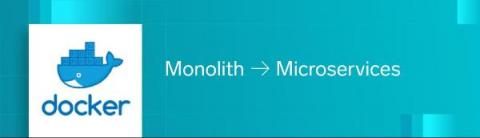
How to design a microservices architecture with Docker containers

Application development trends guide industries (tech and non-tech alike) toward a more cloud-native and distributed model with digital-first strategies. Many organizations are adopting new technologies and distributed workflows. Software development pipelines enable teams to collaborate efficiently and maintain productivity. However, organizations that were early to embrace modern application development strategies and tools, including containerization and multi-cloud environments.

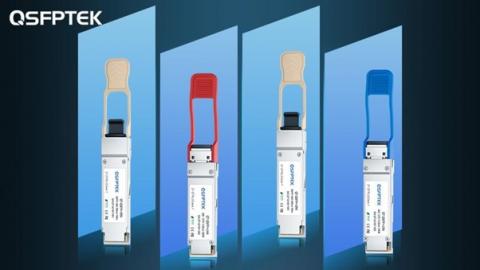
Research on Optical Module in FPGA Optical Fiber Transmission Circuit

The optical fiber data transmission circuit is divided into five parts: optical fiber transmission, photoelectric signal conversion, signal acquisition and transmission, data processing, and data transmission. Optical signals are transmitted between measurement systems through optical fibers; photoelectric signal conversion is performed by optical interface adapters and optical modules to convert signals into photoelectric and electro-optical signals.

The Evolution of IBM Integration Bus to App Connect Enterprise

IBM Integration Bus was one of the first messaging middleware applications to be developed and it has gone through many iterations to reach the stage we are at today with App Connect Enterprise. Like any software application, it has become more feature-rich as time has passed and each iteration has marked a new milestone in the capabilities that it has delivered. We will trace some of the evolutionary paths of IBM Integration Bus to see how it came to be where it is today.

Authenticating Icinga 2 API Users with TLS Client Certificates

When interacting with the Icinga 2 API, the client is commonly authenticated using a password provided via HTTP basic auth. Icinga 2 also support a second authentication mechanism: TLS client certificates. This is a feature of TLS that also allows the client to send a certificate, just like the server does, allowing the server to authenticate the client as well.

Jon Leighton on How the Digital Employee Experience is Central to a People-First IT

Digital Employee Experience (DEX) is grossly understated in today’s corporate landscape, despite the growing interest in digital transformation in companies everywhere. Technology has long been central to the workplace, but not enough effort has been put into the experience of those who use it. Enterprises, especially global enterprises, can spend upward of tens of thousands of dollars on software and digital appliances to make work easier for their team.