Operations | Monitoring | ITSM | DevOps | Cloud

Chaos Engineering 2023 with Chaos Mesh

We've seen a tremendous transition in the architecture of our systems over the years, from basic, linear systems to increasingly sophisticated, non-linear systems. We've moved away from monolithic programs, where a single person could comprehend the entire operation of a system, and toward a distributed world dominated by a microservices design.


Launching a new dashboarding experience

Since we launched the new SquaredUp last Fall, our focus has been making it easier than it’s ever been to connect to any data source, build beautiful dashboards, and share them with anyone. Today we’re excited to announce a fully redesigned dashboarding experience that does just that. The new dashboarding experience remains backed by data mesh technology, which means your data stays where it lives – it’s simply stitched together and available on-tap from the source.

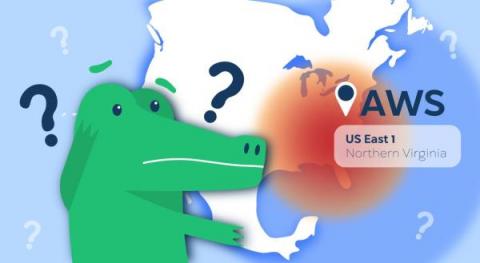
Is Northern Virginia Really the Least Reliable AWS Region And Why?

AWS users usually assume that Northern Virginia, also referred to as US East (N. Virginia) and us-east-1, is the least reliable in terms of uptime. We analyzed AWS outage history in 2022 across regions to see if N. Virginia, indeed, had the most downtime. Then we reviewed and proved some of the theories as to why N. Virginia has the most outages.

Would You Notice If A Feature Was Costing Your SaaS Company Too Much?

It’s a fact of life within the SaaS world that some features will perform better or worse than others in terms of costs versus revenue. If it were possible to develop every single new release in a way that it would flawlessly maintain desired profit margins, everyone would be doing it. What separates the major players from companies that struggle year after year is how they monitor and respond to changing circumstances as they arise, and whether they learn from past mistakes.

Error Logging: A Complete Guide for Beginners

Today's applications are incredibly intricate and interconnected, often relying on numerous third-party services and libraries. With this complexity comes an increased likelihood of things going wrong. However, an error doesn't usually announce itself with great fanfare and a detailed explanation. More often than not, it shows up as an unexplained crash, a suspicious slowdown, or a surprising output. Error logging shines a spotlight on these problems.

Maximizing CI/CD Pipeline Efficiency: How to Optimize your Production Pipeline Debugging?

At one particular time, a developer would spend a few months building a new feature. Then they’d go through the tedious soul-crushing effort of “integration.” That is, merging their changes into an upstream code repository, which had inevitably changed since they started their work. This task of Integration would often introduce bugs and, in some cases, might even be impossible or irrelevant, leading to months of lost work.

Is Teams The Be All & End All Of The Modern Workplace?

Teams has become more than just a handy platform to send the odd chat message or drop documents over to a colleague. In fact, it’s become fundamental to the way organizations across the world operate. But does it tick every box for modern businesses? Nearly, yes.

Digital Business Transformation Never Ends-Can Your Infrastructure Keep Up?

Digital transformation—and its intended benefits, including flexibility, scalability, agility, cost control, and more—is enabled by cloud computing. You need all these things because, now more than ever, businesses and markets are highly dynamic. Sometimes it’s an opportunity you want to capitalize on. Other times it’s a threat, such as a disruptive competitor, or a challenge, like new regulatory requirements. Some things you see coming, and others take you by surprise.

7 Types of Incident Response Tools

Incident response tools are software applications or platforms designed to assist security teams in identifying, managing, and resolving cybersecurity incidents. Incident response is a crucial part of an organization’s cybersecurity strategy, making it possible to detect threats, analyze vulnerabilities, respond to attacks, and recover from security breaches. Incident response tools are vital for safeguarding organizations against evolving cyber threats.