Operations | Monitoring | ITSM | DevOps | Cloud

Performance Indicators: 12 Types of KPIs & When to Use Them

Indicators can be a powerful tool to measure the success of a business. With the right mix of indicators, you can uncover valuable insights and track progress toward goals. However, knowing which indicators to use and when to use them for the right purpose is crucial to measuring success accurately! In this article we'll explore 12 types of performance indicators, when they should be used and how to use them to measure success. Curious to learn more? I'll share more details below.


Introducing Adaptive Metrics: A new cost management feature in Grafana Cloud

You’ve convinced your organization that cloud native is the way forward. You’ve championed Kubernetes and sworn by Prometheus. You’ve onboarded multiple teams to your centralized observability platform. Then you open your latest bill and see a lot of commas in your invoice, and a sinking feeling sets in. Sound familiar? We’re keenly aware of the pain this can bring. As metric cardinality grows in cloud native environments, so does the cost to store and retrieve the data.

Ask Miss O11y: To Metric or to Trace?

Dear Miss O11y, I remember reading quite interesting opinions from you about usage of metrics and traces in an application. Did you elaborate on those points in a blog post somewhere, so I can read your arguments to forge some advice for myself? I must admit that I was quite puzzled by your stance regarding the (un)usefulness of metrics compared to traces in apps in some contexts (debugging).

Mythbusting IPv6 with Jan Zorz, and Why IPv6 Adoption is Slow

IPv6 was developed in the late 1990s as a successor to IPv4 in response to widespread concerns about the growth of the Internet and its potential impact on the existing IPv4 address protocol, in particular potential address exhaustion. It was assumed that after some time as a dual-stack solution, we would phase out IPv4 entirely. Almost twenty-five years later, however, we are approaching full-scale depletion of IPv4 addresses, in part because IPv6 adoption is still lagging.

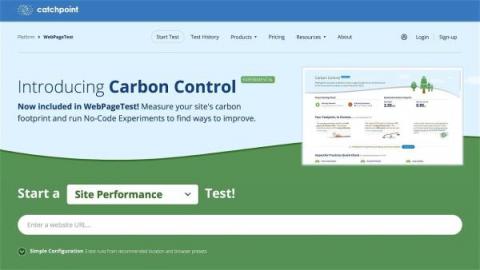
Building a Greener Digital Future: Catchpoint Launches Carbon Control

In our quest for a greener planet, we have become increasingly aware of the detrimental effects of single-use products like plastic bottles, coffee cups, and plastic bags on greenhouse gas emissions. However, there exists an ominous carbon culprit that goes largely unnoticed—the carbon footprint of the Internet.

A Comprehensive Guide to Troubleshooting Celery Tasks with Lightrun

This article explores the challenges associated with debugging Celery applications and demonstrates how Lightrun’s non-breaking debugging mechanisms simplify the process by enabling real-time debugging in production without changing a single line of code.

What is Software Deployment? Definition, Scope, and Best Practices

Software deployment is a central task for IT teams in organizations of all sizes. The entire process of releasing software applications to end users can present a few challenges, as it encompasses a wide range of activities, that go from building and testing software, to packaging and deploying it. Effective software deployment is critical for ensuring that software applications are delivered securely, reliably, and efficiently.

Tame the performance of code you didn't write: A journey into stable diffusion

In our daily lives as developers, we have to deal with a lot of code that we did not write ourselves (or wrote ourselves but already forgot that we did). We use tons of libraries that make our lives easier because they deal with complex stuff like machine learning, time zones, or printing. As a result, much of the code base we work with on a daily basis is a black box to us. But there are times when we need to learn what is happening in that black box.

How to Choose the Best CDN Monitoring Tool for Your Needs

Rich content like videos and graphics used to cause network congestion and long load times when all the content was stored on a centrally located server. Fortunately, Content Delivery Networks (CDNs) came to the rescue in the late 1990s, letting users load rich content from a location geographically closer to them and reducing load times by distributing a cached version of content across servers worldwide.