Operations | Monitoring | ITSM | DevOps | Cloud


The latest News and Information on Monitoring for Websites, Applications, APIs, Infrastructure, and other technologies.

Experience Everywhere Wrap Up: Electric Energy Around the World
The Experience Everywhere tour is a wrap, and what a tour it was! We had an incredible time meeting up with our customers, partners, and DEX practitioners from all around the world to share expertise, learn, and grow. If you couldn’t make it (or even if you could) – you can relive all the action now over on our Experience Replays. Below, we asked a few Nexthinkers to send us their thoughts on each of the four Experience locations.
Checkly Recognized by Intellyx: A Reflection of Our Commitment to Monitoring as Code
We're excited to share that Checkly has been named a 2023 Winter Intellyx Digital Innovator. This recognition resonates deeply with our Monitoring as Code (MaC) workflow and the values we uphold in delivering Checkly to cloud-native engineers, solving uptime and reliability challenges to ship with confidence.
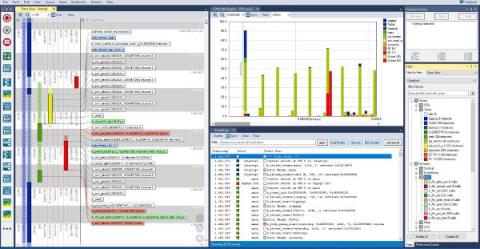
Tracealyzer 4.8.2 Is Out
Tracealyzer version 4.8.2 has just been released. This version mainly fixes bugs, such as custom state machine models not being remembered on trace reload, and eliminates a number of compiler warnings in the Recorder source code. In addition, the update features improved streaming over UDP, and the bundled SSH library SSH.NET has been updated to the latest version. Users with a current maintenance contract can upgrade to Tracealyzer 4.8.2 from within the application, or by visiting the update page.

VictoriaMetrics Enterprise, the World's Fastest Open-Source-Based Monitoring: Try It for Free
We’re happy to announce that we now offer a free trial of our VictoriaMetrics Enterprise solution! Designed to help solve an organisation’s monitoring and observability set ups, no matter the scale, VictoriaMetrics Enterprise provides reliable, secure and cost-efficient monitoring. The free trial of VictoriaMetrics Enterprise is perfect for organisations with large data loads, for whom cost-efficient monitoring is mission-critical.

Improving Logic App security by suppressing workflow headers in external HTTP calls

AI's Impact on Cloud-Native at KubeCon 2023
Cloud-native developers and practitioners gathered from around the world to learn, collaborate, and network at KubeCon/CloudNativeCon North America 2023 between November 6th and 9th at McCormick Place in Chicago, IL—myself included. This wasn’t my first time attending—I’ve been coming to KubeCon since 2016—but it was easily one of the most exciting experiences I’ve had as part of the Cloud Native community.

Spotlight: Sentry for Development
A long time ago I worked on a project called Django Debug Toolbar (DJDT). It was a local development plugin that would give you a debug overlay within Django’s development environment, helping you diagnose things like the SQL queries being made, environment configuration, and what templates were rendered. In general, it made the local dev experience much better, helping you prevent or more easily fix things like N+1 queries.