Operations | Monitoring | ITSM | DevOps | Cloud

The latest News and Information on Monitoring for Websites, Applications, APIs, Infrastructure, and other technologies.

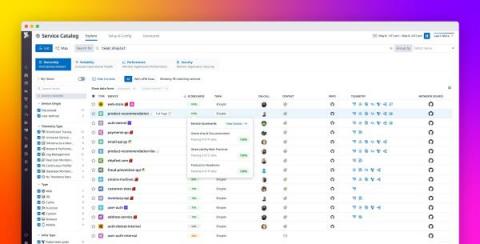
How to monitor CoreDNS with Datadog

In Part 1 of this series, we introduced you to the key metrics you should be monitoring to ensure that you get optimal performance from CoreDNS running in your Kubernetes clusters. In Part 2, we showed you some tools you can use to monitor CoreDNS. In this post, we’ll show you how you can use Datadog to monitor metrics, logs, and traces from CoreDNS alongside telemetry from the rest of your cluster, including the infrastructure it runs on.

Monitoring as Code in Your Software Development Lifecycle

When we launched the Checkly CLI and Test Sessions last May, I wrote about the three pillars of monitoring as code. Code — write your monitoring checks as code and store them in version control. Test — test your checks against our global infrastructure and record test sessions. Deploy — deploy your checks from your local machine or CI to run them as monitors.

InfluxDB 3.0 is up to 45x Faster for Recent Data Compared to InfluxDB Open Source

With the release of InfluxDB 3.0, one of the big questions is: how does it compare to previous versions of InfluxDB? We have begun benchmarking InfluxDB 3.0 with production workloads to start giving users more insight into the benefits of adopting InfluxDB 3.0. In this post, we look at recent benchmarks comparing InfluxDB 3.0 to InfluxDB Open Source (OSS) 1.8.

DataDog Flex Logs vs Coralogix Remote Query

While Coralogix Remote Query is a solution to constant reingestion of logs, there are few other options today that also offer customers the ability to query unindexed log data. For instance, DataDog has recently introduced Flex Logs to enable their customers to store logs in a lower cost storage tier. Let’s go over the differences between Coralogix Remote Query vs Flex Logs and see how DataDog compares. Get a strong full-stack observability platform to scale your organization now.

Measuring the time between spans in an OpenTelemetry trace with a Clickhouse query

In a recent conversation on our SigNoz community Slack, a user shared their query that asks a deceptively simple question: what is the average time between two spans in a trace? The usefulness of this answer is evident if you think about how often the total trace time does not highlight the time you care about most. This could mean any number of things: that the total trace time of handling a web request might include lots of spans after a satisfying response was sent to the user.

Cribl Makes Waves at Black Hat USA 2023, Unveils Strategic Partnership with Exabeam to Accelerate Technology Adoption for Customers

One of our core values at Cribl is Customers First, Always. These aren’t just buzzwords we use to sound customer friendly; it’s ingrained in our daily communication and workload. Without our customers, we wouldn’t exist. One of the ways we’ve upheld this value is to seek out strategic partnerships with other companies aligned with our customers’ needs – both present and future.

Mainframe Observability with Elastic and Kyndryl

As we navigate our fast-paced digital era, organizations across various industries are in constant pursuit of strategies for efficient monitoring, performance tuning, and continuous improvement of their services. Elastic® and Kyndryl have come together to offer a solution for Mainframe Observability, engineered with an emphasis on organizations that are heavily reliant on mainframes, including the financial services industry (FSI), healthcare, retail, and manufacturing sectors.

Top 5 Guidance Report recommendations by Site24x7 to enhance visibility into your AWS EC2

AWS EC2 Monitoring- Guidance Report recommendations Getting visibility into your Amazon Web Services (AWS) Elastic Compute Cloud (EC2) instances is a challenge. Site24x7 enables you to enhance your visibility into AWS EC2 instances, consolidating all information in a unified location. You can replace the isolated monitoring approach for EC2 instances by combining instance metadata with system-level metrics. This allows for effective monitoring of your dynamic AWS EC2 environment.

Unify your observability signals with Grafana Cloud Profiles, now GA

Observability has traditionally been conceptualized in terms of three core facets: logs, metrics, and traces. For years, these elements have been seen as the “pillars” of observability, serving as the foundational components for system monitoring and delivering key insights to improve system performance. However, with the exponential growth in system complexity, a more comprehensive and unified perspective on observability has become necessary.