Operations | Monitoring | ITSM | DevOps | Cloud

The latest News and Information on Monitoring for Websites, Applications, APIs, Infrastructure, and other technologies.

Logz.io's New Features: Easier, Faster, and More Cost-Efficient Observability

Our product strategy this year was relatively simple. Many observability practitioners we spoke with complained that observability was oftentimes slow, heavy, complex, and costly – which can be summed up in our CEO’s recent blog on modern observability challenges. While our customers didn’t report similar challenges, we wanted to further distance ourselves from this typical observability experience.

Network Performance Reporting Feature Release

Obkio’s long-awaited Network Performance Reporting feature is now available for all users of Obkio’s Network Monitoring App. Create custom network monitoring reports to simplify and visualize the analysis of information in your network. Learn more about how to access and use Network Performance Reporting with Obkio.

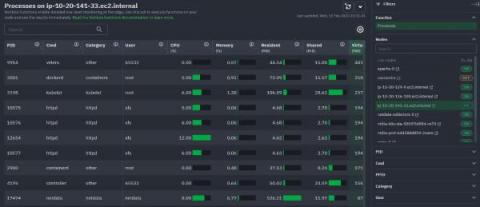
Search Observability Data In-Place: Store Where You Want, Query When You Want

When we created Cribl Search, we wanted to give systems administrators the ability to query data without having to spend resources on collection and processing first — but we didn’t stop there. With Search, we’re also making it possible to query all the data you’ve already collected, processed, and kept in places like object stores, file systems, analytics tools, S3 buckets, or other data stores.

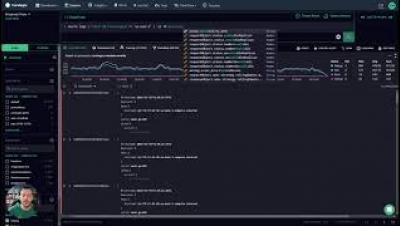
Tracing with InfluxDB IOx

Tracing has always been a key use case for time series data. But admittedly, it’s also one that past versions of InfluxDB could not handle as well as we wanted. One of the roadblocks was the cardinality issue. Tracing data is, almost by definition, high cardinality data and prior to InfluxDB IOx, high cardinality data could affect query performance.

AWS and InfluxDB - Reflections on re:Invent 2022 Keynote

Amazon re:Invent is a major technology event every year. At this year’s re:Invent, the keynote by AWS CEO Adam Selipsky made a concerted effort to draw connections between technology and some of the key challenges that people around the world, and in some cases beyond the terra firma of Earth, face. While the presentation touched on a wide range of topics, one overarching theme was the intersection of the physical and digital worlds, and the role technology plays in bridging that divide.

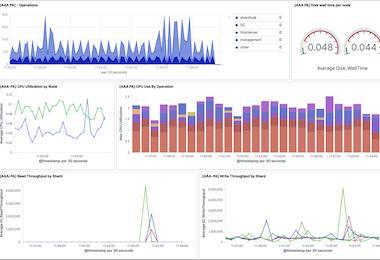
Troubleshooting Azure SQL Database Performance Issues

When applications suffer performance degradation often the root cause of the issue is a database problem. In this guide we’ll show you 7 ways to troubleshoot your Azure SQL database performance issues using metrics and insights from the eG Enterprise monitoring solution.

Visualize everything with Uptrends Grafana integration

Grafana is long known as a leading open source platform for those needing beautifully rich, composable operational dashboards. The notion of being able to connect disparate data sources to Grafana for improved monitoring of infrastructure, log analytics, and overall better operational efficiency is an increasingly alluring prospect for those in fintech, ecommerce, and other industrial sectors.

7 Incident Management Best Practices to Improve Business Efficiency

Think about the last time your IT systems had an outage: How did your team react to it? Were they organized with a clear idea of how best to resolve the issue? Or was it chaotic, with people firing questions from all directions and customer service channels ablaze with requests for help? Digital technology disruptions are typical (and even expected) at the workplace, but it doesn’t have to be chaotic, with teams rushing around to extinguish the metaphoric fire.

A Complete Guide to PostgreSQL Performance Tuning: Key Optimization Tips DBAs Should Know

PostgreSQL is an open-source relational database that is highly flexible and reliable and offers a varied set of features. Even though it is a complex database, it provides great integrity and performance. Also, you can deploy it on multiple platforms, including a light version for websites and smartphones. Because you can deploy Postgres in different ways, it comes out of the box with only some basic performance tuning based on the environment you’re deploying on.