Operations | Monitoring | ITSM | DevOps | Cloud

The latest News and Information on Monitoring for Websites, Applications, APIs, Infrastructure, and other technologies.

Covid-19 response drives decentralized IT Ops

As Covid-19 continues to dramatically affect the world, Interlink Software is squarely focused on supporting its customers and partners to continue to serve the thousands of employees and customers reliant on their services. Without the luxury of detailed, strategic planning, our customers have been forced to adapt at speed to current events, supporting an unprecedented number of employees as they transition to working from home. Interlink Software included.

InfluxDB is Now Available in Google Cloud Marketplace

In February, we announced the general availability of InfluxDB on Google Cloud, as well as a rich set of integrations that allow you to use our time series data platform to monitor your Google Cloud services, store sensor data from Google IoT core, and send your time series data to Pub/Sub for analysis on Google AI Platform.

Monitoring Kafka performance metrics

Kafka is a distributed, partitioned, replicated, log service developed by LinkedIn and open sourced in 2011. Basically it is a massively scalable pub/sub message queue architected as a distributed transaction log. It was created to provide “a unified platform for handling all the real-time data feeds a large company might have”.Kafka is used by many organizations, including LinkedIn, Pinterest, Twitter, and Datadog. The latest release is version 2.4.1.

Collecting Kafka performance metrics

If you’ve already read our guide to key Kafka performance metrics, you’ve seen that Kafka provides a vast array of metrics on performance and resource utilization, which are available in a number of different ways. You’ve also seen that no Kafka performance monitoring solution is complete without also monitoring ZooKeeper. This post covers some different options for collecting Kafka and ZooKeeper metrics, depending on your needs.

Monitoring Kafka with Datadog

Kafka deployments often rely on additional software packages not included in the Kafka codebase itself—in particular, Apache ZooKeeper. A comprehensive monitoring implementation includes all the layers of your deployment so you have visibility into your Kafka cluster and your ZooKeeper ensemble, as well as your producer and consumer applications and the hosts that run them all.

Monitor Jenkins jobs with Datadog

Jenkins is an open source, Java-based continuous integration server that helps organizations build, test, and deploy projects automatically. Jenkins is widely used, having been adopted by organizations like GitHub, Etsy, LinkedIn, and Datadog. You can set up Jenkins to test and deploy your software projects every time you commit changes, to trigger new builds upon successful completion of other builds, and to run jobs on a regular schedule.

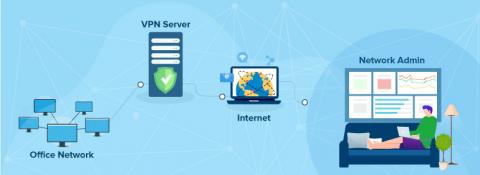
Monitor VPNs-The secure gateway to your networks

While SaaS has made digital transformation a cakewalk, the virtual private network (VPN) takes credit when it comes to remote work. A lot of enterprises, as well as small and medium-sized businesses, continue their seamless operations remotely and securely through their VPN. VPNs enable private networks to communicate with the compute resources of public and shared networks.

Release 1.21: Introducing new collectors, faster exporters, and improved security

We’re in the middle of a scary, uncertain time, and we hope those of you reading are staying safe and healthy. Despite the current challenges, the 40+ members of the remote-first Netdata team have been hard at work on the next version of the Netdata Agent: v1.21.0. This release is foundational: While we do have fantastic new collectors and three new ways to export your metrics for long-term storage, many of the most significant changes aren’t even those you’ll notice.

The More You Monitor - 9 Steps to Prevent Alert Storms

Developing a monitoring and alert management strategy that reduces the frequency of alerts while increasing the effectiveness of the alerts you do receive is easier than you might think. Follow these 9 steps and not only will alert storms will be a thing of the past, but you and your IT team will be able to keep your systems and applications up and available. Or, e-mail us @ marketing@logicmonitor.com