Operations | Monitoring | ITSM | DevOps | Cloud

The latest News and Information on Monitoring for Websites, Applications, APIs, Infrastructure, and other technologies.

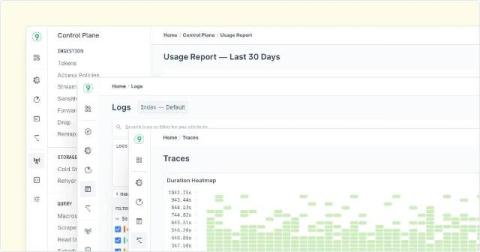
InfluxData Brings Higher Performance and New Features to InfluxDB 3.0 to Power Massive Time Series Workloads at Scale

New capabilities, including faster query performance and management tooling, advance the InfluxDB 3.0 product line InfluxDB Clustered general availability gives developers the power of InfluxDB 3.0 for the self-managed stack.

How Webpage Monitoring Enhances Technical SEO

Search engine optimization (SEO) is the art of bringing your site higher in search engine result pages (SERPs) to increase its discoverability and competitive advantage. It involves detecting keywords that your target audience uses, publishing well-optimized content that's easy to crawl and rank for search engines and valuable to users, posting expert content on trusted sources to build credibility, and so on. Yet, technical SEO is much different.

Multi Element Selection in Icinga DB Web

From time to time we want to bring not so widely known features of Icinga into spotlight. In this effort it’s a not so obvious feature, that was available in the monitoring module of Icinga Web 2 at some point already. It has also been available in Icinga DB Web since its release. We’re talking about selecting multiple list items. Our goal was to make it as obvious as possible, without wasting screen space for those users who are already aware of the feature.

FluentD vs FluentBit - Choosing the Right Log Collector

As applications grow in complexity, the ability to gather, process, and analyze logs becomes crucial for maintaining system health and troubleshooting issues. Two popular open-source log collectors have emerged as frontrunners in this space: FluentD and FluentBit. But how do you choose between them? This article dives deep into the FluentD vs FluentBit debate, exploring their features, performance, and use cases to help you make an informed decision.
Sponsored Post

Benchmarking OpenAI models for automated error resolution

Large Language Models (LLMs) are increasingly shaping the future of software development, offering new possibilities in code generation, debugging, and error resolution. Recent advancements in these AI-driven tools have prompted a closer examination of their practical applications and potential impact on developer workflows.
Sponsored Post

What Customers Love About Exoprise

At Exoprise, we always listen to customers' input and ensure they have the best experience possible. Our customer success, support, and engineering teams have been hard at work, collecting this feedback and insights to identify the functionality and features loved by our customers. Today, we'll be sharing the top five favorites that have been brought to our attention in recent conversations. These features, some well-known and widely used, to some more powerful yet lesser-known functionalities. Whether you're new to Exoprise or a seasoned user, you may discover something new and valuable.

What Are Network Packet Drops & How to Measure Them

Imagine you’re in the middle of a phone call, and suddenly, the conversation cuts out for a moment. You miss a word, a sentence, or even an entire part of the discussion. It’s frustrating, right? This interruption is similar to what happens in a network when data packets are dropped and fail to reach their destination. These interruptions are known as network packet drops.

Lumigo Introduces AI to Simplify Observability Workflows

Lumigo is expanding its troubleshooting and observability platform with cutting-edge AI-powered tooling, now available in beta, which will provide developers and DevOps teams with the fastest and most cost-efficient way to debug and observe complex microservices. AI is quickly reshaping the technology landscape. However, observability tools have been slow to find ways to leverage AI in a fashion that provides tangible value.