Operations | Monitoring | ITSM | DevOps | Cloud

Introducing Megaport Webhooks: Your Systems Act Before Your Team Does

Learn how Megaport Webhooks deliver real-time events to your tools, enabling faster responses, automated workflows, and less manual work. The tools that run modern infrastructure operations, SIEM platforms, IAM solutions, and CI/CD pipelines are built to act on events as they happen. But the problem with this approach is that finding out what has changed on your account has always meant asking by either polling the API on a schedule, or waiting for an email response.

Monitoring Fundamentals in Six Lessons: From Golden Signals to Error Budgets

Summer is the perfect time to step back from the alert stream and revisit the ideas your whole monitoring practice quietly rests on. Not the newest tool or the shiniest dashboard — the fundamentals: what to measure, how to read it, when to wake someone up, and what to do when something breaks at 2 a.m. We packed six of those fundamentals into a free, no-signup PDF — The DevOps & Monitoring Summer Workbook, complete with hands-on exercises and an answer key.

Best Anomaly Detection Software: 9 Tools Compared on Cost and Coverage

Does the anomaly you need to catch show up in infrastructure, in security logs, in a data pipeline, or in a revenue figure? If you already know the answer, you probably learned it from an incident. A service degraded quietly, nobody got paged, and the post-mortem showed the signal had been in the data for hours. The thresholds were set correctly, and they still could not separate a busy Tuesday from a failure.

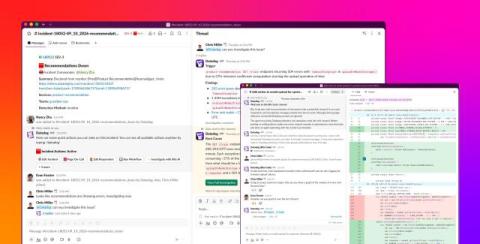
Triage Production Incidents with a Single Prompt Using the AppSignal CLI

At AppSignal, we love talking to our customers to learn how they're using the product. Recently, one of them showed us something worth sharing: with a single chat prompt, his AI agent searches production logs, closes incidents, and checks whether a pull request has shipped. Automating that kind of work turned out to be a matter of building the right agent skill.

CLIs are more token-efficient than MCP. Or are they?

MCP servers have a reputation: they eat your context window. CLIs paired with skills, on the other hand, are more token efficient. But is this still true? I dropped all my MCP servers five months ago. Five months is a long time in AI land. When Anthropic came up with the concept of skills, many people stopped using MCP servers in favor of CLI tooling and skills.

Stop Writing Log Lines: Use eBPF to Catch PII and Credentials

Tired of out-of-control log expenses and manual logging discipline? Discover next-generation observability with Speedscale. By using eBPF to record full-fidelity data right off the wire, you can instantly run full-text searches, track down leaking PII, and securely map out credentials across HTTP, Postgres, gRPC, and more—all without writing a single log line. Learn more: speedscale.com.

When Status Pages Lie: The Incident Detection Gap

On July 28, 2026, roughly 30,000 people flooded Downdetector with reports that Reddit was broken. Feeds would not load, logins failed, and the mobile app hung. Reddit's own status page, meanwhile, showed a calm wall of green: all systems operational. That contradiction is the whole story, and it is not unique to Reddit. It is one of the most common and most damaging failure modes in modern on-call, and it has a name: the incident detection gap.

Year-End Bookkeeping Checklist for Canadian Small Businesses

TL;DR: Year-end bookkeeping for Canadian small businesses involves reconciling accounts, reviewing payroll records, organizing receipts, preparing financial statements, and getting ready for tax filing. Completing these steps before December 31 helps you escape penalties, maximize deductions, and start the new year with clean books. The end of the fiscal year is a critical point in your business calendar. Properly closing your books impacts your tax obligations, cash flow visibility, and growth planning. With an organized checklist, year-end can be manageable.