Operations | Monitoring | ITSM | DevOps | Cloud

Why Shared Context Matters in Hybrid Cloud Operations

The first post in this series explored why traditional observability breaks down in hybrid cloud environments. As infrastructure, applications, and dependencies stretch across on-premises networks and cloud services, isolated monitoring views leave teams with an incomplete understanding of what is happening and why. That challenge raises the next question: what kind of operational model actually works in a hybrid environment?

Stop pushing broken code to CI: Wire Chunk sidecars into agent hooks

AI agents can write code faster than any developer. But for most teams, the feedback loop hasn’t kept pace. The agent generates code, pushes it to CI, and minutes later a full pipeline run catches a simple linting error or a failing unit test. By then the agent has moved on. Getting back to a working state means rebuilding context from scratch and burning tokens just to fix something that should never have shipped in the first place.

Keep ArgoCD. Get Qovery. ArgoCD Integration Is Here.

Moving to a new platform shouldn't mean weeks of migration work before you see any value. Qovery now lets you connect your ArgoCD server and manage your existing applications directly alongside your Terraform modules, lifecycle jobs, and Qovery-native services, from a single control plane. Alessandro leads product at Qovery. He drives the changelog, roadmap, and product strategy - turning customer feedback into platform capabilities.

BigQuery CI/CD and Database DevOps with Harness | Harness Blog

Modern data platforms are evolving rapidly, and Google Cloud BigQuery has become a core part of analytics, AI, and large-scale reporting architectures. Teams (including Harness) rely on BigQuery to process and analyze massive datasets, but managing schema changes in a secure, repeatable way can still be challenging.

Feature Flag Tools Compared: 10 Best Platforms for Safer Releases | Harness Blog

Releasing new software used to be a big deal. You would set aside a Saturday night, wake up the on-call engineer, push the code, and hope that nothing broke before Monday morning. Then came feature flags, which changed everything without anyone noticing. Feature flags let you separate deployment from release, so you can send code to production in a dormant state and turn it on for users when you're ready. No more 1 a.m. maintenance windows.

Anthropic's Mythos, Glasswing, and how the industry must move forward | Harness Blog

When Anthropic broke the news of Mythos and Project Glasswing, the security community did what it always does. It published a flurry of papers asking "What does this mean for security?" It's a reasonable instinct, but it's the wrong question. The real question is who actually owns the problem?

Patch Management vs Vulnerability Management: What are Key Differences?

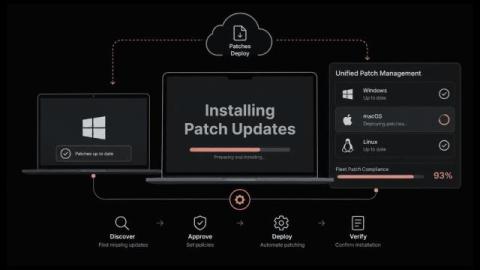
What keeps systems secure in real IT environments, applying fixes quickly or knowing what needs attention first? Most IT teams do not struggle because they lack tools or processes. They struggle because two critical functions are often mixed together. Patch management and vulnerability management. This creates a gap between what is being fixed and what actually needs to be fixed. The challenge is that teams deal with constant alerts, regular updates, and growing security risks.

Test Data Management Demo | Compliance without Compromise

Compliance Without Compromise: Test Data Management That Finally Fits You know you shouldn't have sensitive production data in test environments. But every time you look at fixing it, the options feel impossible: enterprise tools that cost six figures and take months to implement, or DIY scripts that sort of work until they don't. So, it stays on the backlog.