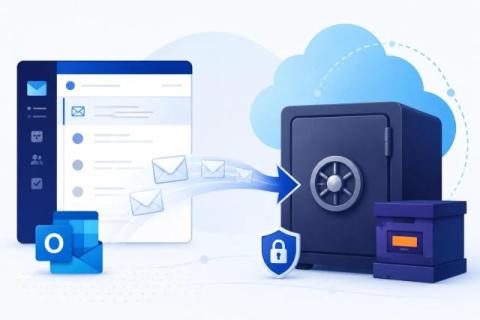
What is Exchange Online Archiving? Microsoft's EOA gives users an in-place archive mailbox - here's what it costs, what it covers, and where it leaves gaps.
Tempo 3.0 introduces a major architectural shift that decouples the read and write paths, with Kafka handling durability on the write side and a new live store serving recent traces on the read side. Blocks are now written at a replication factor of one instead of three, significantly reducing storage overhead. This release also brings TraceQL metrics to general availability, adds comparison operators for filtering metric results at query time, and introduces a new Tempo CLI redact command for removing sensitive trace data on demand without waiting for retention to expire.
This is an excerpt from a real AI team weekly meeting where we talk about the stuff we build and occasionally also demo them! In this one, Principal Software Engineer Sven Großmann demos how he integrated AI Observability into the OTel demo, complete with the guards feature he introduced last week, and Principal Software Engineer Yas Ekinci gives a rare glimpse of LLMSpec, the internal counterpart of the o11ybench benchmark that we use to evaluate Assistant.
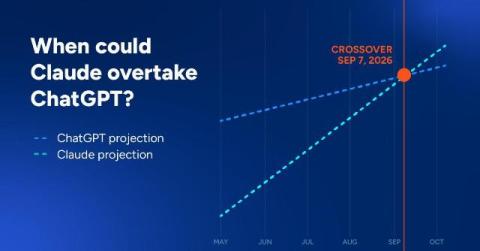
OTT data from early 2026 shows streaming hierarchies holding steady while AI platforms reshuffled rapidly. Claude has substantially increased traffic since January, overtaking Gemini, and is on pace to challenge ChatGPT by fall. Doug Madory digs into the data in this new analysis.
Tempo started with a simple goal: make distributed tracing easier to run at scale. As tracing adoption has grown, however, so have the challenges, including higher data volumes, more complex architectures, and increasing demand for real-time insights directly from traces. Over the last year, we’ve been evolving Tempo’s architecture to meet that moment. And today, we’re sharing the results of those efforts with the release of Tempo 3.0.
We're thrilled to announce that Cycle's European Control Plane is now live! While a few organizations have been utilizing it over the past month, we're eager to officially open access to all teams. Before diving deeper into the "why," let's clarify what a Cycle Control Plane actually is. If you visit our status page, you'll see a list of the core services powering Cycle. These services include everything from our APIs to our 'factory' build systems.
IT leaders rarely think they have an infrastructure problem. When a roadmap slips or an audit finding lands, the reflex is to hire more senior engineers, a bigger platform team, another DevOps lead. But headcount is rarely the real lever. The bottleneck is the "hidden factory": the undocumented, invisible work that sits between a developer writing code and that code reaching customers. It doesn't show up in post-mortems because engineers treat the workarounds as normal.
The pitch for private PKI gets more compelling every year. Public certificate lifetimes are down to 200 days, dropping to 47 by 2029. If you run your own private certificate authority, you make your own rules. Issue certificates for as long as you want, skip the renewal churn. Let’s Encrypt and DigiCert don’t get to tell you what to do. Apple does though.
When a nurse calls for help, every second counts. ER nurses juggle a lot: admission decisions, discharge approvals, orders, physician consults. When they need support fast, they can't afford to chase down the right person manually. Here's how one physician-led medical group solved it using OnPage: Nurses leave a voicemail on a single intake line It's automatically routed into OnPage as an alert to the on-call triage coordinator.