Getting Started: Investigating Suspicious Activity With Torq
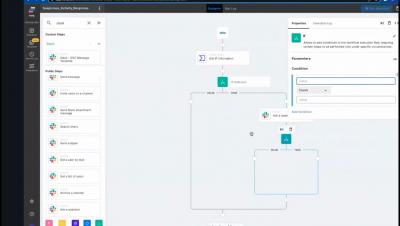
In this brief video, Torq Field CTO Marco Garcia demonstrates how uncomplicated it is to investigate suspicious activity using Torq.


Users of Red Hat Satellite will see changes coming out with regard to how Satellite interacts with Puppet. Satellite has long bundled Puppet in the distribution, using Puppet both as the Satellite installer and for configuration management. Users also had the option to leverage Satellite as an External Node Classifier (ENC) for their Puppet estates. Red Hat acquired Ansible, an imperative configuration management tool, in late 2015.
Let's rip off the bandaid and get the bad news out there first: we're rolling out telemetry for Puppet content. Read on to find out why I think that's actually good news for you, how you can see exactly what data it collects, and how to make sure it never runs if your corporate policy doesn't allow it. And maybe a free beanie if you choose to opt in?
This december, we are posting security advice and modules, every day until December 25th. Now, it’s December 21st, and we’ve gotten through most of the security hardening holiday calendar.
Automation takes repetitive tasks off professionals’ plates, empowering them to free up time to focus on more valuable activities. Moogsoft’s API-driven automation capabilities enable SREs to make better use of their time, leading to better results for the business.
The new maintenance and security update v3.6.0 has been released! StackStorm v3.6.0 comes with an important security fix and great improvements for developers and users. See below, for further information on what’s included in the release.
I’m excited to announce that, for the first time, ServiceNow has been named a Leader in the Forrester Wave™: Digital Process Automation Software, Q4 2021. This complements our recognition as a Leader in the Forrester Wave™: Low-Code Development Platforms for Professional Developers, Q2 2021. We attribute this recognition to our latest low-code innovations in ServiceNow® Creator Workflows and our purpose-built automation components to cover all enterprise processes.
This december, we are posting security advice and modules, every day until December 25th. Now, it’s December 14th, and we’ve gotten to the fourteenth day of the security hardening holiday calendar.
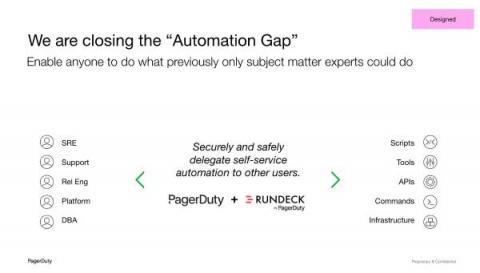
Earlier this fall, we announced a significant evolution in the IT process automation portfolio at PagerDuty—the general availability of PagerDuty Rundeck Actions and early access for Rundeck Cloud. These new offerings reflect our vision to enable companies to take real-time actions by democratizing access to automation. In other words, to quickly and safely delegate automated IT processes to the IT users (and APIs) that need them to get work done.
Today, we are pleased to announce the release of CFEngine 3.19.0! In 2021, for this release, and the launch of CFEngine Build, our focus has been on collaboration. We want to deliver a lot of value to our users through modules, and enable you to share and cooperate on policy, promise types, compliance reports, etc.