I recently spoke with Jeremy White who is using InfluxDB to monitor his aquariums. By collecting IoT sensor data, he has been able to better understand his 200 gallon salt-water aquarium full of fish and coral. The entire project can be found on GitHub. Caitlin: Tell us about yourself and your career. Jeremy: I’m a Senior Network Automation Consultant at Network to Code, and my background is in networking engineering. Network to Code is an industry leader in network automation.
Okay... and we’re back! Yes, there’s been a bit of a hiatus since you’ve heard from us in Core Security, but that’s not because we haven’t been busy. In fact, we’ve released a number of enhancements for both the security and user administration experiences of Splunk Enterprise. Going forward, we’ll be a bit more visible bringing you details on these enhancements.
Editor’s note: This post is a collaboration between Tim Tully, Splunk CTO, and Spiros Xanthos, Splunk’s vice president of product management for observability and IT Ops and previously the founder and CEO of Omnition. My love for the open-source software movement began with Linux in the ’90s and grew during my time at Yahoo! in the early days of Hadoop.
There is no doubt about the fact that Docker makes it very easy to deploy multiple applications on a single box. Be it different versions of the same tool, different applications with different version dependencies - Docker has you covered. But then nothing comes free. This flexibility comes with some problems - like high disk usage and large images. With Docker, you have to be careful about writing your Dockerfile efficiently in order to reduce the image size and also improve the build times.
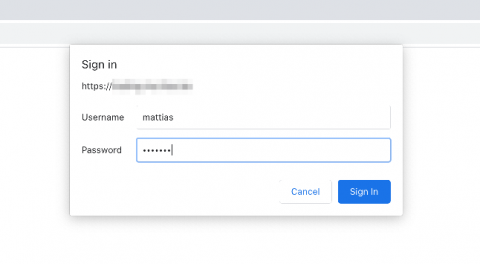
Oh Dear allows you to monitor any kind of website, even those behind HTTP basic authentication. In this guide, we'll cover the steps on how to monitor a website behind an HTTP basic authentication prompt.
Bleemeo announces the General Availability of the new monitoring agent written in Go. This agent is the successor of the previous agent written in Python. All good aspects have been kept: Open Source, easy to deploy, and to use, available as a package for main Linux distributions: Debian/Ubuntu, CentOS/RedHat, available for Windows and available as a container.