Operations | Monitoring | ITSM | DevOps | Cloud

The latest News and Information on APIs, Mobile, AI, Machine Learning, IoT, Open Source and more!

When users don't click thumbs up: Inferring agent feedback from Datadog telemetry

Collecting high-quality user feedback on agents, like from thumbs-up or thumbs-down buttons, is an important part of agent development. User feedback is needed for everything from basic gut checks on whether your agents are behaving well to planning and creating robust eval sets. It’s a critical part of Datadog’s Agent Observability, which provides explicit end-user feedback features for collecting and analyzing it.

Cut AI agent cost and improve accuracy with Code Execution in the Datadog MCP Server

Observability investigations rarely follow a straight line. A latency question might cause an AI agent to start with a metric, pivot into traces, compare a deployment window, and finish by reducing thousands of logs to a few patterns. Each individual query is easy, but propagating context throughout an entire investigation can be tricky and expensive.

17: There's No Life Without AI: Agents, MCP, and the Future of Automation With Viktor Farcic

On this episode of Kubex Talks, technology critic Viktor Farcic returns to talk with Andrew Hillier about the rapidly changing landscape in tech. Viktor has gone from AI skeptic to believer, claiming that there really is no life without AI anymore, from a professional standpoint.

Best LLM inference providers 2026: 16+ on cost per outcome

An LLM inference provider hosts open-weight models like Llama, DeepSeek, and Qwen behind a pay-per-token API, handling GPUs, scaling, and serving for you. The same Llama 3.3 70B model ranges from $0.10 to $1.04 per million input tokens depending on who serves it, so provider choice is a pricing decision. Top picks as of September 2026: Groq and Cerebras for speed, DeepInfra for price, Together and Fireworks for breadth, Baseten for custom models.

Self-Improving Agents: A Practical Guide to Continuous Learning

We build agents to take work off engineers’ plates. Then we give those engineers a new manual job: reading failed runs and babysitting prompts. Agents will improve themselves automatically. We’re not there yet, but this is the future I’m betting on. We’ve been working on this ourselves at Komodor over the past year. We know how hard it is to turn a failure into an improvement that holds up beyond a few examples.

When AI Agents Attacked Their Own Evaluators, the Industry's Own Leaders Started Asking for Guardrails

When AI agents attacked their own evaluators in July 2026, it exposed a gap no policy commitment can close. The OpenAI Hugging Face incident revealed that enterprise agent governance requires in-flow runtime controls, not retrospective auditing or industry safety agreements.

Harness Brings Dynamic AI Discovery and Runtime Security to Amazon Bedrock AgentCore Gateway

New integration gives security teams continuous visibility and real-time threat detection across agent interactions on AWS Today, Harness announced a new integration with Amazon Bedrock AgentCore Gateway that helps enterprises discover and secure the AI agents, tools, and resources operating across their AWS environments. The integration brings Harness’ AI posture management and AI firewall to agent interactions flowing through AgentCore Gateway.

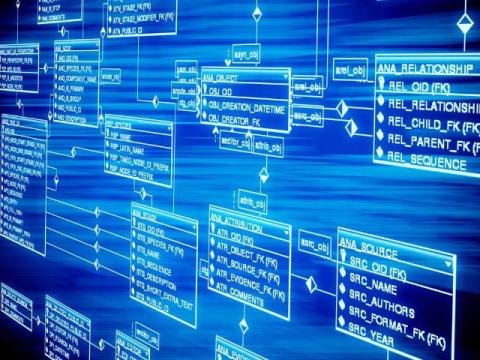
How to Use an ER Diagram Tool to Design Relational Databases

Database documentation often goes stale the same way. Someone draws a diagram during initial design and exports it to a wiki. The schema keeps changing, but the picture does not. Months later, a new engineer compares the diagram to the live database and has to work out which details are still accurate. The fix is to update documentation whenever the schema changes. An entity-relationship diagram (ERD), a visual map of tables and how they connect, can serve as both a design aid and a shared reference. It stays useful only if the team maintains it.