Operations | Monitoring | ITSM | DevOps | Cloud

The latest News and Information on APIs, Mobile, AI, Machine Learning, IoT, Open Source and more!

Team-Based DLP: Give Each Group Its Own Redaction Rules

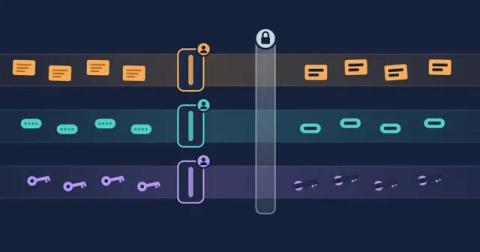
A shared Kubernetes cluster rarely belongs to one team. Payments runs checkout in one namespace, search runs search-api in another, and a risk team runs a scorer somewhere else. One Speedscale forwarder captures API traffic for all of them. Redacting that traffic before it leaves the cluster is what makes it safe to use for testing (the background is in The PII Testing Dilemma). Until now, that forwarder ran exactly one DLP rule. Every team that needed a field redacted had to edit the same JSON document.

How to Turn Off Auto OTA Update on Samsung with AirDroid Business

Are unplanned OTA updates disrupting your POS transactions, digital signage, or field operations? Unexpected firmware updates can cause costly downtime and business interruptions, especially during working hours. In this video, you'll learn how to block forced OTA update requests on Samsung devices, ensuring continuous device availability and operational stability.

Using AI to Govern AI: Why Security Needs to Operate at Machine Speed

What caught my attention in the recent OpenAI and Hugging Face incident wasn’t any one exploit. It was the way the models could keep progressing across systems, combining techniques and acting with a level of speed and persistence that changes how security teams need to operate. The incident emerged during internal cybersecurity evaluations in July 2026.

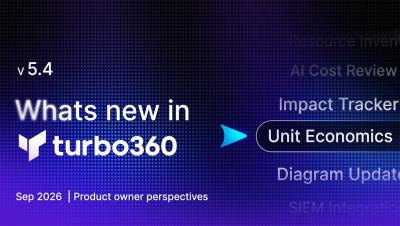
Unit Economics & AI Cost Review: What's New in Turbo360 v5.4

Move the FinOps conversation from what you spend to the value you get back. Unit Economics puts your own KPIs next to Azure cost so you can talk in margin, not just bill. New holistic trackers prove what your reservations and schedules are really saving, an AI Cost Review agent turns "how are we doing?" into a full analysis in about a minute, and rightsizing now reaches your Log Analytics workspaces.

Token-based pricing: how AI usage billing works (2026)

Token-based pricing charges for AI by the volume of text a model processes, metered separately for input tokens (what you send) and output tokens (what the model returns). As of 2026, OpenAI, Anthropic, and Google all bill their APIs this way, and the model is spreading into enterprise chat products. Bills scale with usage rather than seats.

Kling AI pricing in 2026: plans, credit costs, API packages, and the spend no invoice shows

Kling AI pricing runs from a free tier of 66 daily credits to a reported $180 per month, with annual billing about 34% cheaper. Kling 3.0 bills per second: 6 to 12 credits for standard resolutions and 30 for native 4K. The API sells separate prepaid packages from $9.80 to $7,560.