Operations | Monitoring | ITSM | DevOps | Cloud

The latest News and Information on APIs, Mobile, AI, Machine Learning, IoT, Open Source and more!

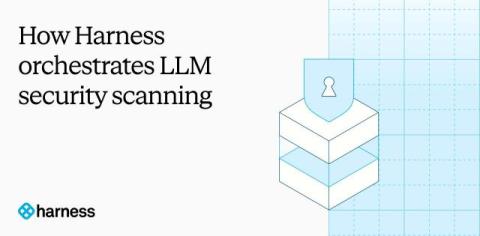
How Harness orchestrates LLM security scanning

Large language models are effective at security review for the same reason they are effective at many other tasks: they reason rather than pattern match. In plain terms, a traditional scanner checks code against a list of known bad patterns, the way a spell checker flags a misspelled word, regardless of what the sentence means. An LLM can instead follow the program's logic: trace a piece of attacker-controlled input through several layers of application code to determine whether it is reachable.
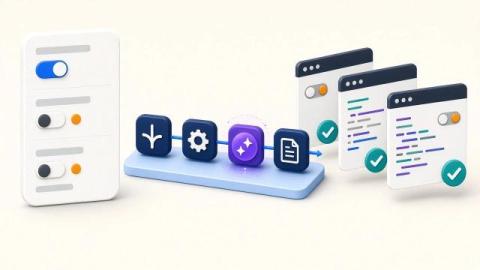
How we automated feature-flag cleanup with Agentic Pipelines

The hard part of a feature flag is rarely adding it. It is remembering to remove it months later, when the rollout is over, the original context has faded, and there is always a more urgent piece of work waiting. Since April 2026, one Atlassian team has used Agentic Pipelines to clean up their monthly backlog of stale feature flags. The workflow prepares the change and opens a pull request, while engineers still review and merge the pull request.

The Clearinghouse For AI Agents Has A Blind Spot

Jamin Ball’s recent piece, “Systems of Record Won the SaaS Era — Clearinghouses Will Win the Agents Era,” is the cleanest articulation I’ve seen of where the durable moat goes next. His argument is simple and, I think, correct: the SaaS era rewarded whoever owned the system of record, and the agent era will reward whoever owns the clearinghouse.

Let Builders Build, and Agents Cook.

Software used to be built by engineers. Not any more. Low-code tools brought in domain teams. AI copilots brought in everyone else. And now agents are building and acting alongside humans; marketing, finance, HR and legal are all shipping the apps they used to file tickets for. The number of people (and things) building on your data has exploded, and it isn't slowing down. And there's no single, standardized way to build, there likely never will be.

Deploy Your Apps and Agents Where Your Data Lives With Aiven Runtime

Everything that makes an app or agent real happens after it works on your machine. Locally coding an app is a joy: hot reload, a seeded database, a mocked API key. Then you go to ship it, and "deploy" quietly expands into a Dockerfile that behaves in CI, somewhere to actually run the container, a database it can reach, TLS, secrets wired into the environment, and a pipeline to hold it all together. The feature took an afternoon. The plumbing takes the rest of the week.

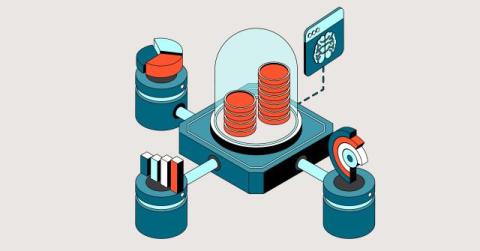
Know Your data, Trust Your AI: Aiven DataHub is now GA

Ask a simple question "who are our most profitable customers?" and things fall apart. The data lives in six systems, nobody agrees which table is canonical, the column called profit is actually revenue, and the business rules that matter live in someone's head or a Confluence page nobody's touched since 2023. Now point an AI agent at that same mess.

Fine tune your own custom LLM with Canonical Charmed Kubeflow and Feast

So you want your own pet LLM huh? Knowing where to start can be quite tricky, so luckily for you I’ve put together this end-to-end guide. It’ll get you not just started; you’ll end with a fully working chatbot that you’ve fine tuned on the dataset `nampdn-ai/tiny-webtext`, which is a training dataset designed to improve models’ critical thinking abilities. Buckle up, this is going to be both fun and deep.

Scaling Android development without scaling hardware

How shared Android capacity helps engineering teams move beyond fixed device labs In the first blog of this series, we discussed how programmable Android environments can replace manual device preparation with a repeatable lifecycle. A workflow requests an environment with a predefined configuration, executes the required task, collects the results, and releases the resources once the work is completed. Automation enables a team to create a single Android environment reliably.

Stop capping your best people.

Somewhere in your company, a team is three weeks into the AI project that’s going to matter. Somewhere else, a support pilot from the spring is still summarizing every ticket with a frontier model, and nobody has looked at it since it started working. On the invoice they’re identical, and the company has two moves: leave everything open, which funds the waste, or cap everyone, which kills the bet.