Mailchimp
Not subscribed to OpsMatters Newsletter


Since 2018, General Data Protection Regulation (GDPR) has been on everyone’s lips – and for good reason. It’s the gold standard for consumer protection. While privacy laws present challenges to enterprises big and small, we can’t escape the reality that consumer data is constantly mined and sold.
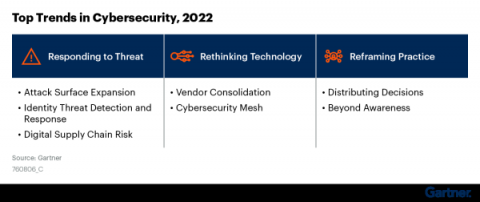
Gartner recently released a report highlighting the top trends in cybersecurity for 2022. They discuss how businesses must reframe their security practices, rethink their technology, and adopt new responses to modern threats. This is in line with DevSecOps trends that we see in the market and hear about from our customers. Companies that are working in this way are taking a more holistic approach to cybersecurity by adopting tools that speed up and, when possible, automate security.
During major incidents, it’s crucial that all stakeholders are provided with the status updates they need. Those communications however need to be tailored to what the stakeholder actually needs, and provided in a streamlined format that works best for them. Just like alert fatigue, communication fatigue can be detrimental during an outage or other service reliability issue.
Software programs today can be likened to a complex stew, with multiple ingredients sourced from disparate places. In software, open-source tools are a major ingredient. According to the 2020 Open Source Security and Risk Analysis (OSSRA) report produced by the Synopsys Cybersecurity Research Center, 99 percent of the codebases contain at least one open source component, with open source comprising 70 percent of the code overall.
Go, an open-source programming language backed by Google, makes it easy to build simple, reliable, and efficient software. Go’s efficiency with network servers and its friendly syntax make it a useful alternative to Node.js. All network applications need well-tested features, and those developed in Go are no different. In this tutorial, we will be building and testing a simple Go blog.