Mailchimp
Not subscribed to OpsMatters Newsletter


A modified version of this blog post appeared in the June 2021 issue of Signal magazine. Decisions that need to be made in an instant require answers in real time, but existing big data systems are unable to return queries quickly enough for real-time analytics. And with growing data being queried by more connected users than ever before, it’s getting increasingly challenging to maintain fast reaction times.
TL;DR: We recommend that you use the new point-in-time functionality in Elasticsearch if you can. The scroll API is no longer recommended for deep pagination (even though it still works). Most data is constantly changing. When querying an index in Elasticsearch, you are essentially searching for data at a given point of time.
In a previous post, we described how we envision cloud-native initiatives reaching the 2.0 phase, where phase 1 was centered around providing clusters and running its underlying infrastructure effectively. Now that teams are starting to move some of their existing services to a microservices architecture, developers and platform engineers are being tasked with implementing the right policies and governance controls to ensure applications are running as securely as possible.
The ongoing news of massive cyberattacks on manufacturing and energy companies has been a wake-up call. Operational Technology (OT) Security had not been on the radar of many CISOs and plant managers until they got hit. After reacting in a defensive mode last year it is time to step up with a proactive security strategy including OT. Secure Factory by Splunk helps manufacturing companies better understand and address their unique security challenges.
As my colleague, Tim Frank, wrote about recently in his blog post, "The Department of Defense Data Strategy: An Important Start," in late 2020 the Department of Defense (DoD) released its new Data Strategy — providing focus and direction for the Department’s efforts to become data-centric at all levels of its enterprise.
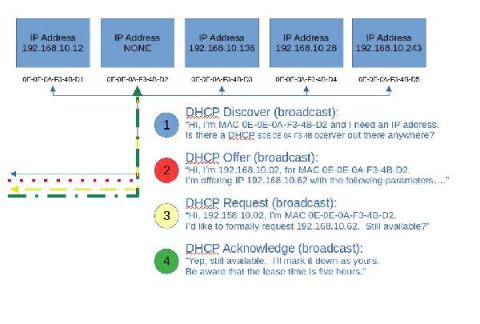
Let’s step back and take a very basic look at DHCP. In fact, let’s look at the analogy of assigning a street address to your house. Usually, this is done by the local 911 dispatch office, or some other central authority. They typically use either a survey map or a latitude, longitude pair to locate you, before they assign your house numbers from a pool of available addresses, compatible with other addresses in the area.
Two factor authentication (2FA) increases your account security further than just using a username and password. In addition to a password (the first factor), you need another factor to access your account. A great example to demonstrate this is when you withdraw money from an ATM. To access your bank account you need both your physical bank card and to know your PIN number. These are the two factors you need to withdraw money = 2 factor authentication!