Mailchimp
Not subscribed to OpsMatters Newsletter


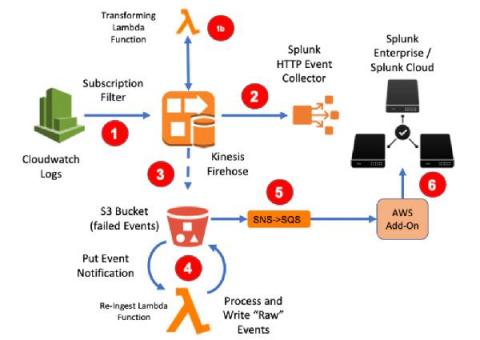
With Kinesis Firehose being Splunk’s preferred option when collecting logs at scale from AWS Cloudwatch Logs, we’ve seen plenty of posts on setting this up, automation and examples on transforming event content. But what about when things go wrong?
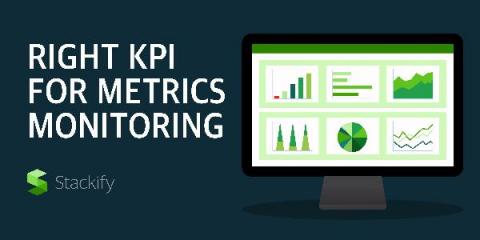
Software metrics measure a software’s characteristics in a countable manner. That is why tracking the metrics is a huge part of the development stage. The goal of system metrics monitoring is to determine the quality of the product or process during the development and deployment stages. However, not all metrics are beneficial to your software development. That is why you need key performance indicators (KPI) that will help your processes to move forward.
Recently, I led a webinar on Sensu cluster federation and some of the ways users can effectively use Sensu’s API. With the API, you can create as many clusters as needed and federate them without much effort. Also, Sensu makes the management of these clusters very easy by allowing you to manage access using a single web UI. In this post, I will recap the webinar, with step-by-step demos that will touch on how you can.
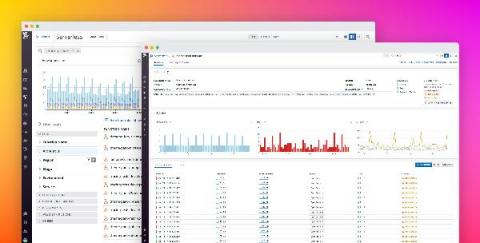
Serverless platforms like AWS Lambda have helped accelerate application development by removing the need to provision and manage infrastructure resources. However, serverless architecture presents new monitoring challenges. Because AWS Lambda handles underlying infrastructure for you, you don’t have access to system-level metrics. Instead, you have to monitor your Lambda functions for insight into their performance and resource usage.
NVIDIA Jetson is a family of embedded, low-power computing boards designed to support machine learning and AI applications at the edge. Organizations use Jetson boards for complex video and image processing and analysis, automating build processes in factories, and improving city infrastructures. For example, Jetson-based devices enable cities to analyze traffic patterns with their existing traffic cameras in order to find ways to improve their most congested intersections.
Logz.io has recently launched its Smart Tiering solution, which gives you the flexibility to place data on different tiers to optimize cost, performance and availability. Our mission has been to make Smart Tiering a multi-cloud and multi-region service. As part of this launch, we are glad to announce that the Historical Tier now supports Microsoft Azure Blob Storage, alongside AWS S3.
In this article I’m going to discuss table joins and the let statement in Log Analytics. Along with custom logs, these are concepts that really had me scratching my head for a long time, and it was a little bit tricky to put all the pieces together from documentation and other people’s blog posts. Hopefully this will help anyone else out there that still has unanswered questions on one of these topics.